Social Week: AI Slop Under Pressure, TikTok Turns LIVE into a Cultural Event, and Brands Look for New Ways to Work with Creators
Social platforms revealed a fundamental paradox this week. On one hand, they are embedding AI into creation, remixing, advertising and search. On the other, they are starting to crack down harder on content that feels generic, lacks a clear author or human point of view, or comes with unresolved rights issues.
LinkedIn wants to limit the reach of AI slop. YouTube is adding AI remixing tools to Shorts. TikTok has reached an agreement with Universal Music Group to fight unauthorised AI-generated music. X is limiting posting volume for unverified accounts and pushing for more originality. And TikTok LIVE, through the example of Paul McCartney, is showing that live streaming no longer has to be just an add-on to a campaign. It can become the main cultural moment.
AI, yes. AI slop, no.
The biggest story of the week is the changing relationship between platforms and artificial intelligence. This is not about social networks turning against AI. Quite the opposite. AI will become an increasingly important part of content creation, advertising, search and content recommendation.
The difference is that platforms are starting to distinguish between AI as a tool and AI as a shortcut to empty content.
LinkedIn announced this week that it wants to limit the reach of content that feels like generic AI output without a clear human perspective. At the same time, it is also targeting automated comments that flood discussions and lower the quality of conversations. LinkedIn is not banning AI. It is essentially saying: AI can help with wording, but the content still needs to carry real experience, a point of view and value.
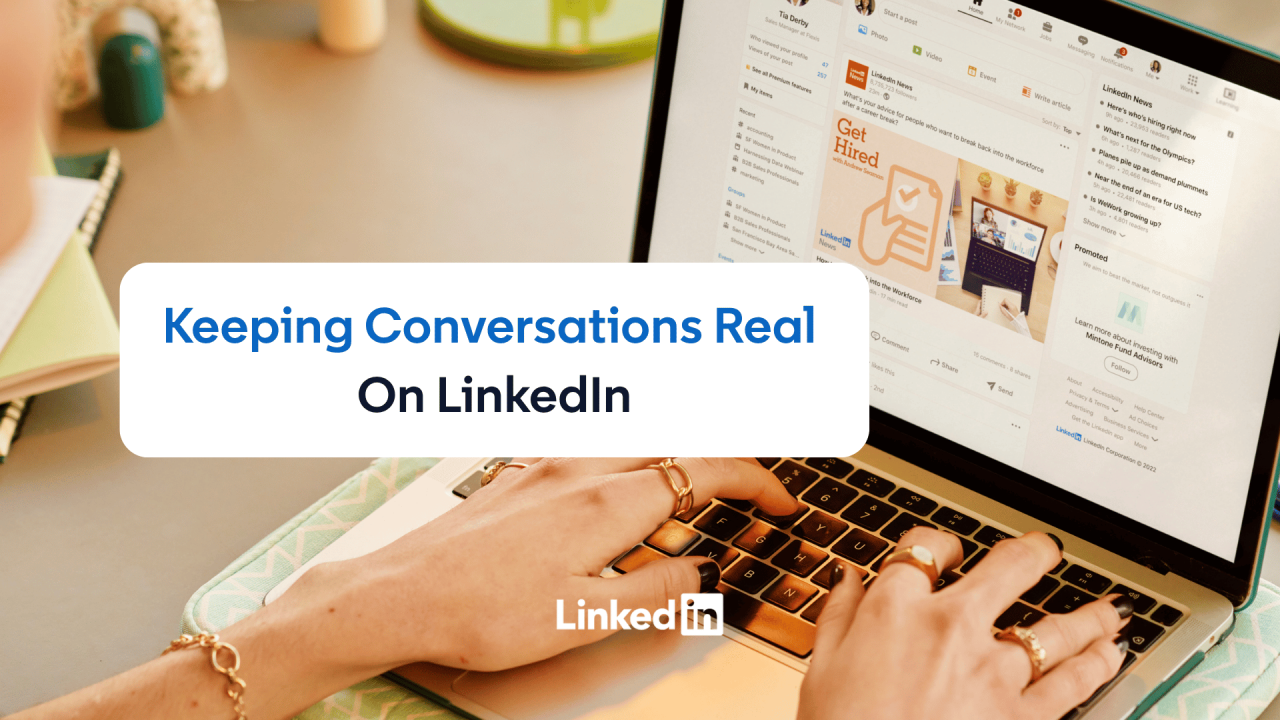
That is an important signal, especially for B2B communication. The era of universal posts such as “5 things I learned as a leader” is running out of steam. What will work is specific experience, proprietary data, a strong opinion, a real story and expertise that cannot be generated from a single prompt.
X fits into the same trend. Under current rules, unverified accounts are limited to 50 original posts and 200 replies per day. The platform is using this to curb spam, high-volume content and cheap feed flooding. At the same time, X is dealing with accounts that mass-repost other people’s content and monetise it through creator revenue share. The direction is the same here as well: less volume, less recycling, more original content.
YouTube is approaching AI from a different angle. It is adding AI remixing tools to Shorts, built on Omni, allowing users to transform existing clips, add new elements or shift them into a different aesthetic. This could strengthen creativity and remix culture. But it also increases the risk of another layer of cheap, interchangeable content.
TikTok is dealing with an even more sensitive area: music. Its new agreement with Universal Music Group includes a commitment by the platform and the label to jointly remove unauthorised AI-generated music and better protect attribution for artists and songwriters.
For social marketing, the conclusion is clear. AI can speed up creation, research, editing, text variations and production. But it cannot replace the actual point. Brands that simply generate average content will disappear into the noise. Those that use AI for better storytelling, faster production and sharper opinions will gain an advantage.
TikTok and Universal Music Group: viral music yes, illegal AI copies no
TikTok and Universal Music Group have signed a new multi-year global licensing agreement. In practice, this means UMG’s catalogue will remain on TikTok and both sides will continue to cooperate on marketing, commercial and content opportunities for artists.
The most important part of the deal, however, is AI. TikTok and UMG have committed to working together to identify and remove unauthorised AI-generated music. They also want to better protect attribution for artists and songwriters.
For TikTok, music is core infrastructure. Without music, a large part of its trends, challenges, remixes and viral moments would not exist. For the music industry, TikTok is both an opportunity and a risk. It can turn a song into a global hit within days, but it also opens the door to AI-powered imitation of voices, styles and songs.
The agreement with Universal Music Group therefore shows where the relationship between platforms and the creative industries is heading. This is not the end of remix culture. It is an attempt to set rules: yes to viral trends, yes to new ways of discovering music, but no to illegal AI copies and no to content without clear authorship.
For brands, this is a practical issue. Music in campaigns is no longer a detail. In TikTok and Reels campaigns, licensing, sounds, remixes and the use of AI-generated elements will become increasingly important. A poorly used sound or an unclearly licensed AI track can create both reputational and legal risk.
TikTok LIVE with Paul McCartney: live streaming as a cultural premiere
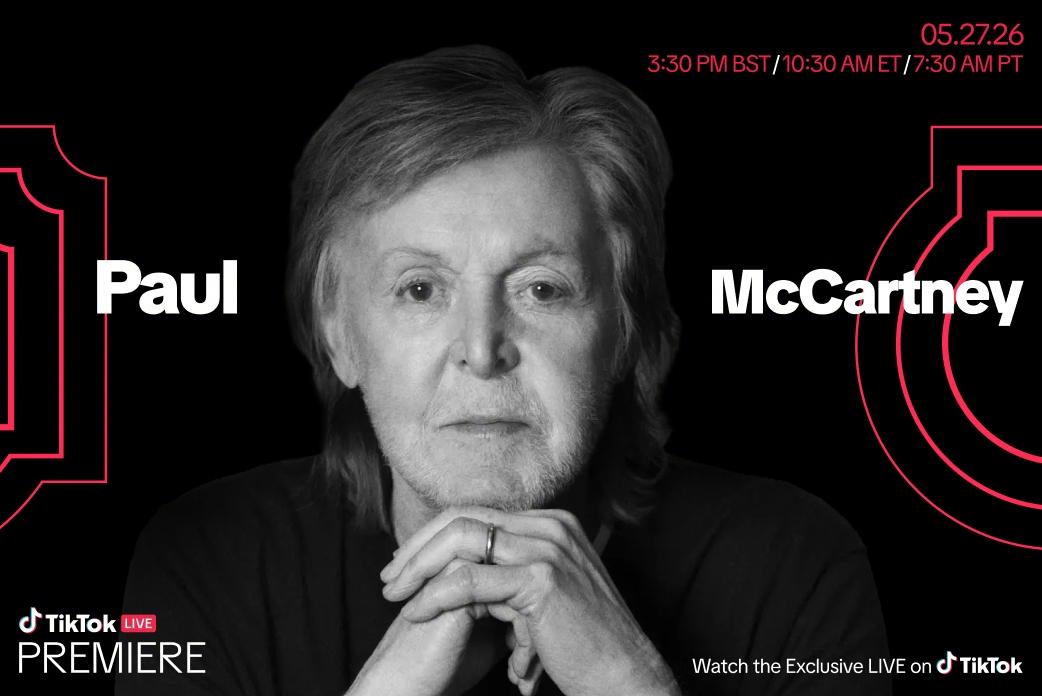
TikTok also showed another side of its development this week. It announced a new format, TikTok LIVE Premiere, with the first major showcase being an event with Paul McCartney for the album The Boys of Dungeon Lane. It is designed as a global LIVE Q&A, where McCartney talks about inspiration, the songwriting process and answers questions from fans.
This is not just a regular livestream. TikTok is positioning the new format as a global cultural premiere. The platform is showing that LIVE should not be just a random broadcast from a phone, but a carefully designed event.
That is an interesting signal for brands as well. For a long time, live streaming was treated as an add-on to content. Something you switch on during a launch campaign when there is time left. TikTok is showing the opposite logic: LIVE can be the central moment of a campaign. It can connect a product launch, a community, fan questions, exclusivity and follow-up short clips for further distribution.
Alongside cultural premieres, a second layer of TikTok LIVE is also growing fast: live commerce. Live streaming can become a sales channel, a demonstration space and a community experience all at once. In practice, this means a brand no longer has to simply show a product in an ad. It can present it in real time, explain it, show it in use and connect it directly with purchase.
For brands, the lesson is simple: LIVE should not be improvised as “let’s turn on the camera and see what happens.” It needs dramaturgy. Why should someone watch right now? Who is the main face? What will happen live? What is the moment of surprise? And how will the content be cut into other formats afterwards?
YouTube: creator content is no longer just internet video
YouTube, meanwhile, is pushing creator content further into the mainstream. This week, the platform highlighted six shows seeking attention during Emmy season, including Hot Ones, Subway Takes, Challenge Accepted, Huge If True and Royal Court.
This is more than a PR announcement. YouTube is saying that creator content no longer wants to be seen as a secondary category of the internet. It wants to stand alongside television, streaming and major entertainment formats.
For brands, this is an important shift. Working with a creator no longer has to mean one post, one Reel or one product placement. With strong creators, a brand enters a media format that has its own audience, dramaturgy, rhythm, style and cultural value.
In other words, it no longer makes sense to treat some creators as “influencers for hire.” They are media partners. The question is therefore not just how many followers they have. What matters more is what format they create, what audience they understand and how a brand can enter their world without feeling out of place.
Meta Forum: communities as fuel for AI search
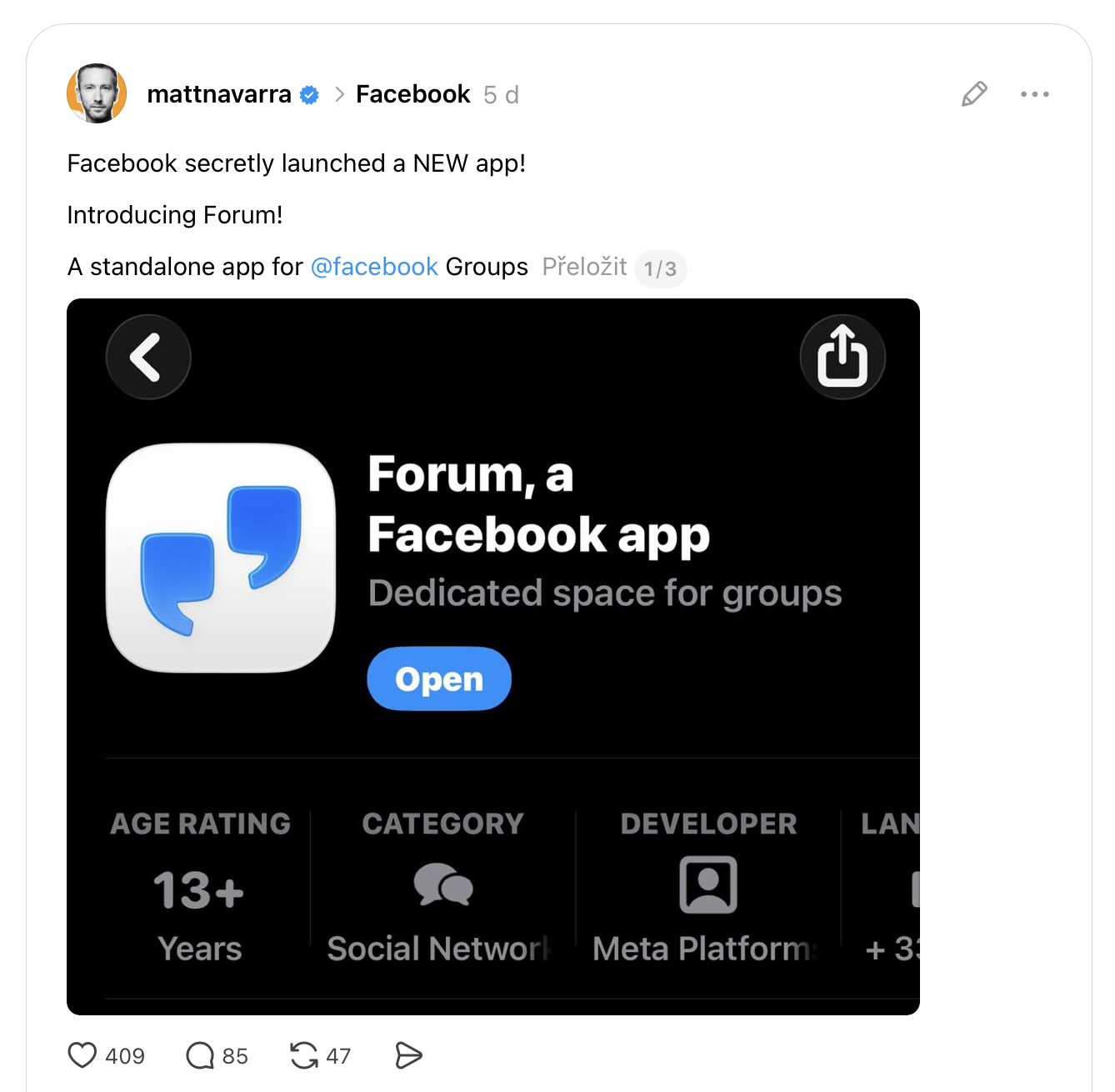
Meta quietly launched Forum this week, a standalone app built on Facebook Groups. It functions as a space for group discussions, community discovery and finding answers. The app also includes an AI feature called “Ask”, which can assemble answers from discussions across groups.
At first glance, this is not as attention-grabbing as TikTok with Paul McCartney. Strategically, however, it is very interesting. Meta is trying to extract value from Facebook Groups again. Groups contain exactly the kind of content that is highly valuable today: questions, answers, experiences, recommendations and real discussions between people.
Reddit has built much of its current value on this type of content. People do not go there just for entertainment, but for authentic experience. And community answers are becoming an important source for AI search as well. The Verge described Forum as a combination of Reddit, Facebook Groups and Google AI Overview.
For brands, this means the return of communities. Not necessarily as places for classic advertising, but as spaces for trust, education, customer insights, ambassadors and answers to specific questions. Brands that know how to work with communities will gain more than another distribution channel. They will gain a living source of what people actually care about.
This week was not about one major feature or one platform. It was about the direction in which the social world is moving.
AI will be everywhere: in creation, remixes, search, advertising and measurement. At the same time, the value of human authorship, rights, trust and originality will continue to grow.
Carl for Social
Don't miss what's coming next.
Stay on top of social media trends and tips that help you grow your content on Instagram, TikTok, Facebook, and YouTube. Download Carl for Social — it's free.
Download app