A Revolution in YouTube Metrics: New View Counting and Monetization Rules
Starting August 24, 2026, YouTube is changing the rules of the game: views will now be counted right from the first second of playback. What does this update mean for creators, how will it impact campaign evaluation for brands, and how will it show up in Carl for Social metrics? Read our clear overview.
Starting August 24, 2026, YouTube begins counting public views differently. At first glance, this seems like a minor technical adjustment, but in reality, it will fundamentally impact how we interpret content performance, compare channels, and evaluate marketing campaigns.
What exactly is changing, how will it impact creators and brands, and what does this update mean for metrics in Carl for Social? We have prepared a complete overview for you.
What Is Changing (and When)?
- Views from the first frame: Starting August 24, 2026, YouTube begins counting a public view immediately the moment a video starts playing. This eliminates the previous unofficial threshold of ~30 seconds of watch time.
- A unified rule across all formats: The new rule applies universally across all formats, from traditional long-form videos to Shorts, live streams, and podcasts.
- A sharp rise in metrics: The publicly displayed view count for videos may increase sharply and significantly from late August. However, this does not mean the video gained more real viewers or that people are watching longer. Only the definition of what constitutes a public view is changing.
💡 What remains unchanged?
For YouTube Analytics and monetization, the platform keeps existing metrics based on real engagement (engaged views and watch hours). Therefore, the public view counter change itself has no effect on engagement quality or creators' immediate earnings.
How Will This Impact YouTube Creators?
- Optically better public numbers: Public channel data will look better, especially when comparing content published before and after August 24.
- Emphasis on engagement metrics: A higher view count will not automatically bring higher earnings or longer watch time. It will be even more critical for creators not to rely on a single public metric, but rather evaluate real audience retention and engagement.
🚨 Watch out for upcoming monetization changes (starting February 1, 2027)
YouTube has also announced separate, major updates to the YouTube Partner Program (YPP):
-
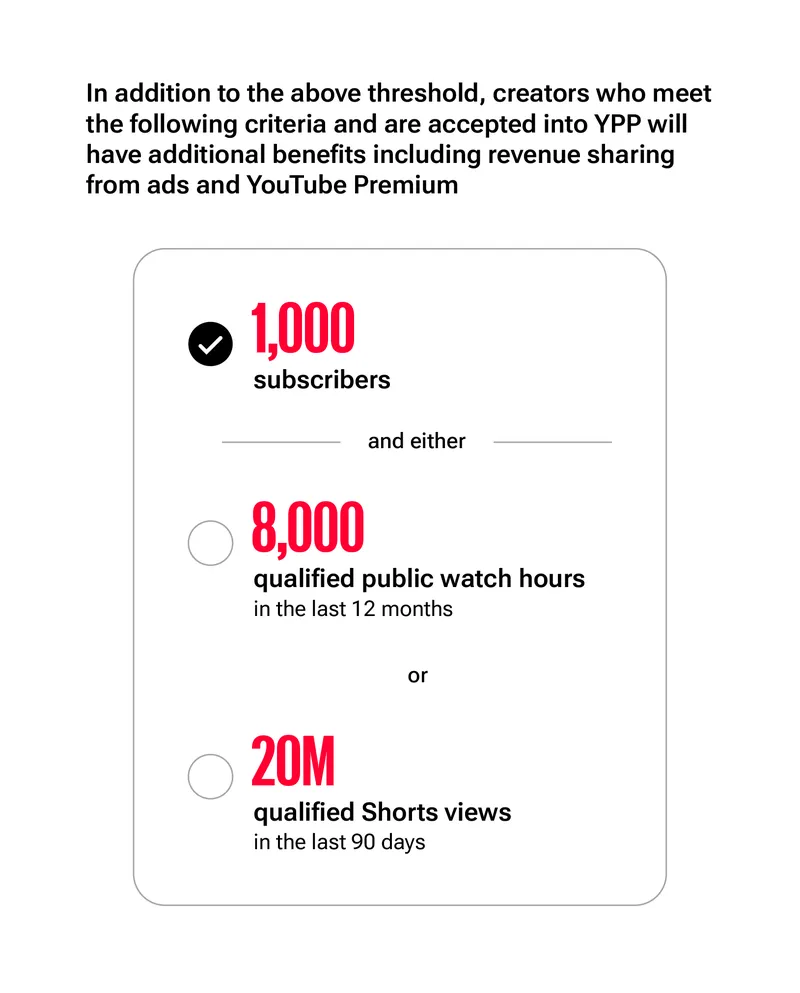
New thresholds for newcomers: New creators wanting a share of revenue from ads and YouTube Premium subscriptions will need either 8,000 valid public watch hours over the last 365 days (up from 4,000) or 20 million valid public Shorts views over 90 days (up from 10M).
-
Rule for Shorts monetization: Channels must maintain at least 10 million valid Shorts views over 90 days to stay eligible for Shorts ad revenue sharing.
-
Existing creators are safe: Higher entry thresholds do not apply to creators already in the YPP. If your Shorts views drop below 10M, you will not be removed from the program and will continue earning on long-form videos.
 How Will This Impact Brands on YouTube?
- No direct historical comparison: When comparing YouTube campaign performance before and after August 24, higher view counts do not automatically indicate better content performance. The increase is largely driven by the new counting methodology.
- Better cross-platform comparisons: YouTube is aligning with platforms like TikTok, which have always counted views from the first frame. This will make cross-platform reporting much easier and provide brands with a more consistent baseline for total reach and content visibility.
- Optically lower CPM: With a higher view volume, cost-per-thousand-impressions (CPM) will experience an optical drop. When evaluating campaign ROI, it is essential to monitor additional attention and conversion metrics.
What Is Changing in Carl for Social?
From a cross-network metric unification perspective, the new definition is a win for us at Carl. Performance comparisons between YouTube and other platforms will be more accurate. On our end, nothing breaks, changes, or requires manual reconfiguration.
Starting August 24, the higher YouTube view baseline will automatically reflect in related metrics:
- Total impressions (impressions total) will increase,
- The Carl Index will rise,
- The cost per thousand impressions (CPM) will optically decrease.
⚠️ Reporting Recommendation:
Period-over-period comparisons of YouTube data (and derived metrics) across August 24, 2026, will be skewed by the definition shift, not by actual content performance shifts. We strongly recommend accounting for this context when reading monthly or year-over-year reports.
Key Takeaways
YouTube is not just changing the number under a video, it is changing how that number must be interpreted:
-
Views will accumulate faster starting August 24, 2026: They count right from video launch (frame 1).
-
This is not a real audience increase: Higher figures merely reflect a rule change. Deeper engagement metrics (engaged views, watch time) in YouTube Analytics remain key for earnings and quality evaluation.
-
Monetization gets stricter (starting February 1, 2027): The view count update does not affect earnings directly, but starting in 2027, YouTube will double YPP entry requirements for newcomers to 8,000 watch hours or 20 million Shorts views.
-
Data flows smoothly in Carl for Social: Tracking adapts automatically without requiring manual updates. When comparing pre- and post-August 24 results, keep in mind: A higher number does not automatically mean better performance, the rules of the game simply changed.
Carl for Social
Don't miss what's coming next.
Stay on top of social media trends and tips that help you grow your content on Instagram, TikTok, Facebook, and YouTube. Download Carl for Social — it's free.
Download app