7 Tips to Stand Out as a Creator This Christmas and Black Friday

This Christmas and Black Friday, you’ll stand out as a creator through preparation, not volume: a face in the hook, the brand only at seconds 3–5, a 45–60 second video, one message and your own sound. These rules come from Carl for Social’s analysis of 200+ Czech campaigns and 800,000+ posts. Why does it matter more than ever this year? According to Traackr, holiday content grew by 73% last year, while attention per post dropped by 28%.
The brief for a holiday collab lands, the product arrives a week before the deadline, and you need to make a video that sells without looking like an ad. At the same time, dozens or even hundreds of other creators are filming a similar video. Same unboxing, same trending music, same “this is the perfect gift for…” hook.
You already know the hook, problem, solution, call-to-action structure. This article goes one step further. First, we’ll look at what’s happening in the feed this year. Then we’ll walk through 7 rules that decide whether people watch your video to the end and whether a brand picks you again. All of them are based on data: our analysis of 200+ Czech campaigns and 800,000+ posts, international reports, and the experience of UGC creator Lucie dos Santos Rosa, who works with brands and creators every day.
A fuller feed, less attention
On Black Friday and at Christmas, you’re not competing to make the prettiest video. You’re competing for a few seconds of attention in the busiest feed of the year. According to a Traackr report, at the end of 2025 creator content volume grew by 73%, while attention per holiday post fell by 28%. For posts around Black Friday, it dropped by as much as 63% (Traackr).
Our Czech data shows the same thing from the other side. In one real campaign, nearly 9 out of 10 impressions never delivered the brand’s full message. People saw the video but left before they understood who it was about and why they should care. And that’s exactly what brands are measuring this year: not how many people glimpsed your video, but how many actually watched it.
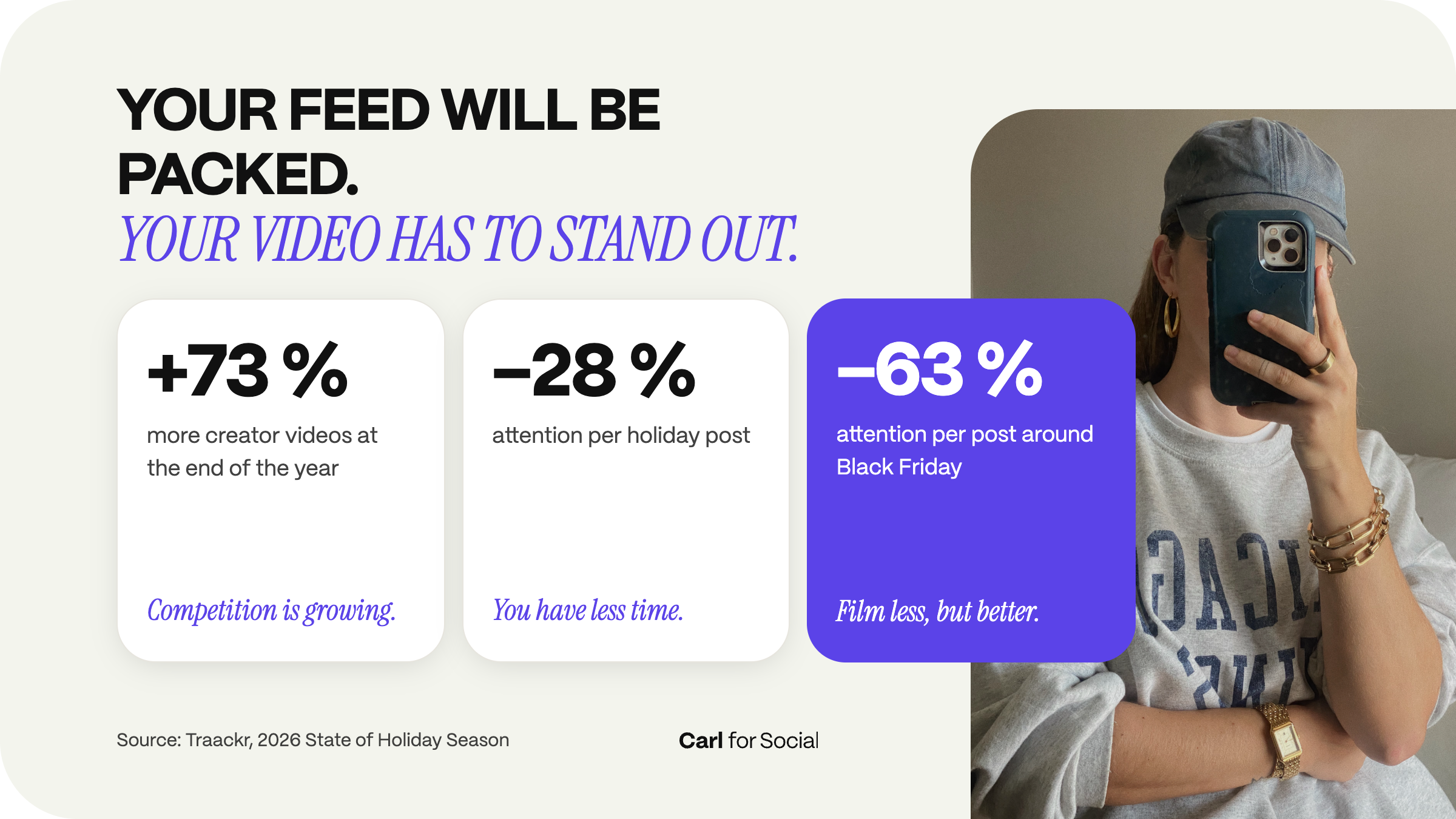 Most creators react to a crowded feed by posting more and faster. You can do the opposite: fewer videos, better prepared. One well-planned video that people watch to the end will do more for you than five quick ones they scroll past.
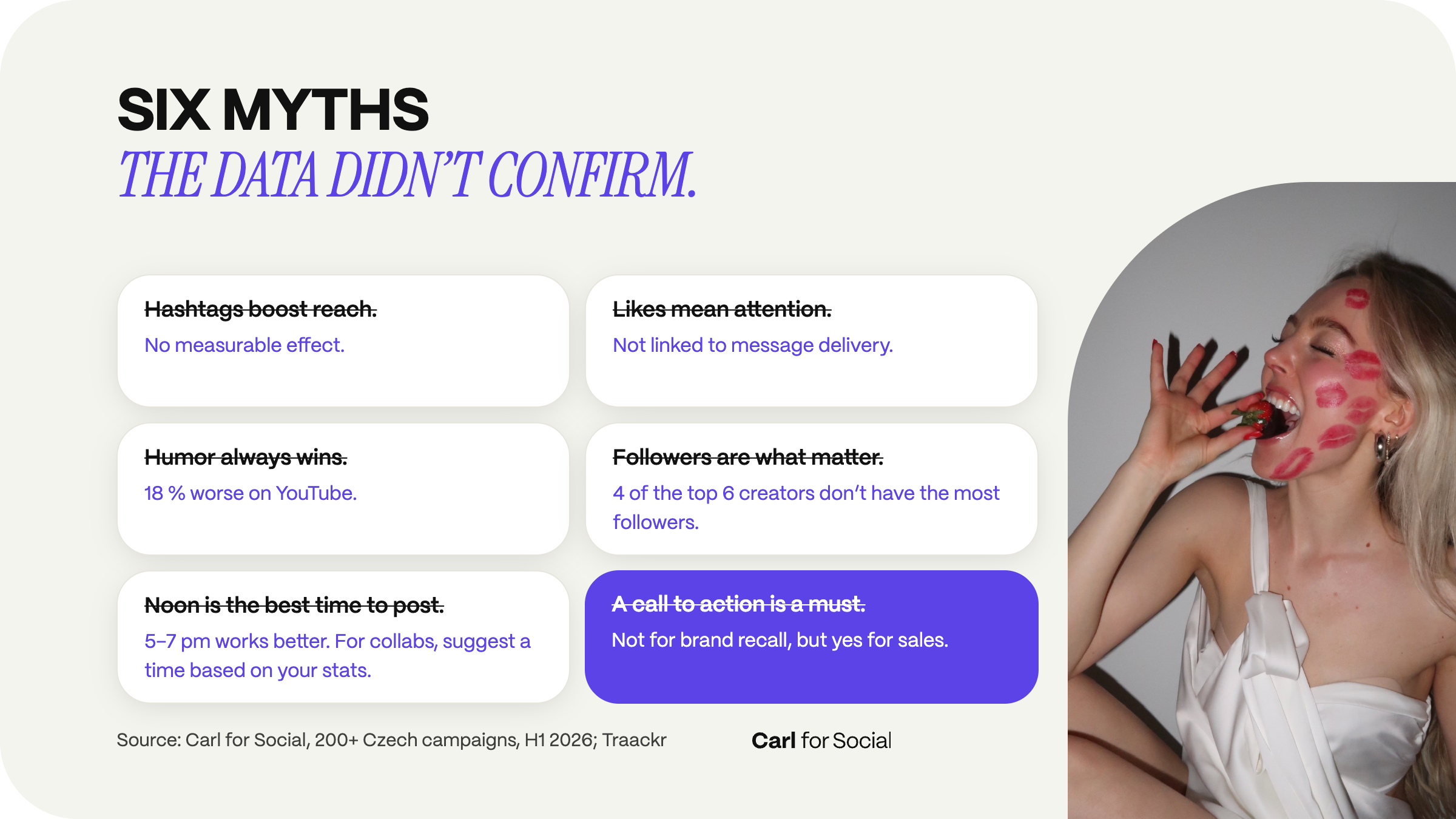
For every post in our analysis, we measured 70+ aspects, from the second the brand appears to the mood and background music. Besides showing what works, the data also revealed what doesn’t, even though creators keep doing it out of habit. Hashtags have no measurable effect on reach, the number of likes has nothing to do with whether a video delivers its message, and posting at noon is only the seventh-best hour of the day.
 From what does work, we picked seven rules. You can use them on your very next holiday collab.
Rule 1: Stand out before you hit record
The biggest difference between an average and a great holiday video is made before you turn on the camera.
- Find your own angle. In November, the feed will be flooded with thousands of tips for a face cream, a candle or a perfume. But gift ideas for a mother-in-law who has everything, or for a friend who just moved, will be few and far between. A specific person and a specific situation are things nobody can copy. Look for inspiration in customer reviews on the brand’s website. You’ll find the words real people use to talk about the product, and they sound far more credible than marketing phrases.
- Shoot it close up and at home. Christmas tempts you toward glitter and big set-ups, but the data says otherwise. An international analysis of 10,000+ holiday posts found that close-up shots (1.17×) and videos filmed at home (1.13×) get more saves. Warm colors like peach and burgundy lead, while silver and metallic aesthetics lose significantly (Traackr). A close-up in your living room feels like a recommendation from a friend. In short: less glitter, more living room.
- Ask the brand what works for them. Before you shoot, find out what the brand’s main message is this year, what content worked in their previous campaigns and whether they also want a shorter version for ads. One question saves you a round of revisions, and it shows you think like an experienced creator.
Finally, write a short script: the hook, one message, shots of the product in action and the ending. It doesn’t have to be long, but it should give you confidence and still leave room for spontaneity.
 Rule 2: Build your hook from three layers and show the brand only at seconds 3–5
Viewers decide in the first two seconds whether to stay. But they don’t decide based on your first sentence alone. They take in what they see, read and hear all at once. That’s why the strongest hooks aren’t one catchy line, but two or three layered hooks, each carrying different information. When the visual shows the unboxing, the text hints at why the gift is special and the sound adds atmosphere, the viewer gets three reasons to stay instead of one.
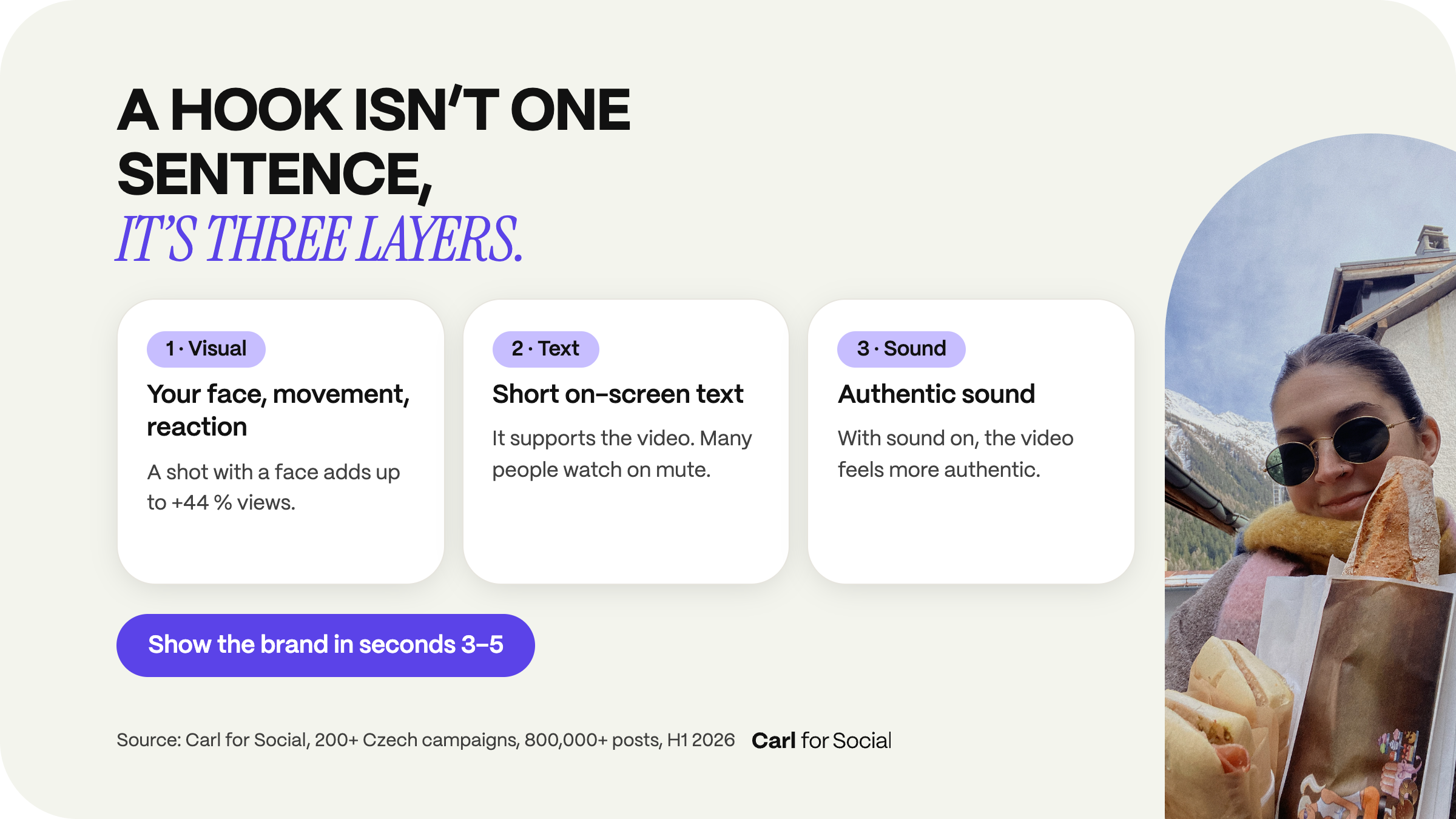 The strongest layer is a face. At least one shot with a human face adds up to +44% views. A talking head for the entire video, however, won’t make the brand more memorable. The face belongs in the hook; the product belongs in a calmer shot where the viewer can actually see it.
So when should you show the brand? Only at seconds 3–5, or after the 10th second in longer videos. A logo or product held up to your face from the very first second is read by the brain as an ad, and the thumb keeps scrolling. First give the viewer a reason to stay, then tell them what it’s all about.
A practical test: play your finished hook once with the sound off and once with sound only. Lots of people watch on mute, so it has to work in both versions.
Rule 3: Show the product in action
After the hook comes the part that sells. In our analysis, the best-performing videos showed the product in action for at least 30% of the video’s length. Don’t just show what the product looks like. Show how you use it and what it did for you. Instead of “this cream has a light texture,” say “after a week in the mountains, it’s the first time my skin isn’t cracking.” Talk about results, not features.
This ties into video length. Many international guides recommend the shortest videos possible, say 5–10 seconds. Our Czech data says the opposite: there’s a 2.9× difference in performance between videos under 10 seconds and videos over two minutes, and the shortest ones perform worst. Attention on a brand simply needs time. A viewer who stays for a minute remembers the brand. One who glimpses it for three seconds doesn’t.
That’s why the goal is at least 45–60 seconds, and on YouTube, two minutes or more. Only if the video has quality content, of course. Gift guides, hauls and tutorials naturally fill that length. And if the brand wants a shorter version for ads, offer them a cut of the longer video as an extra service.
Here’s how to put a video like that together, from the first second to the ending:
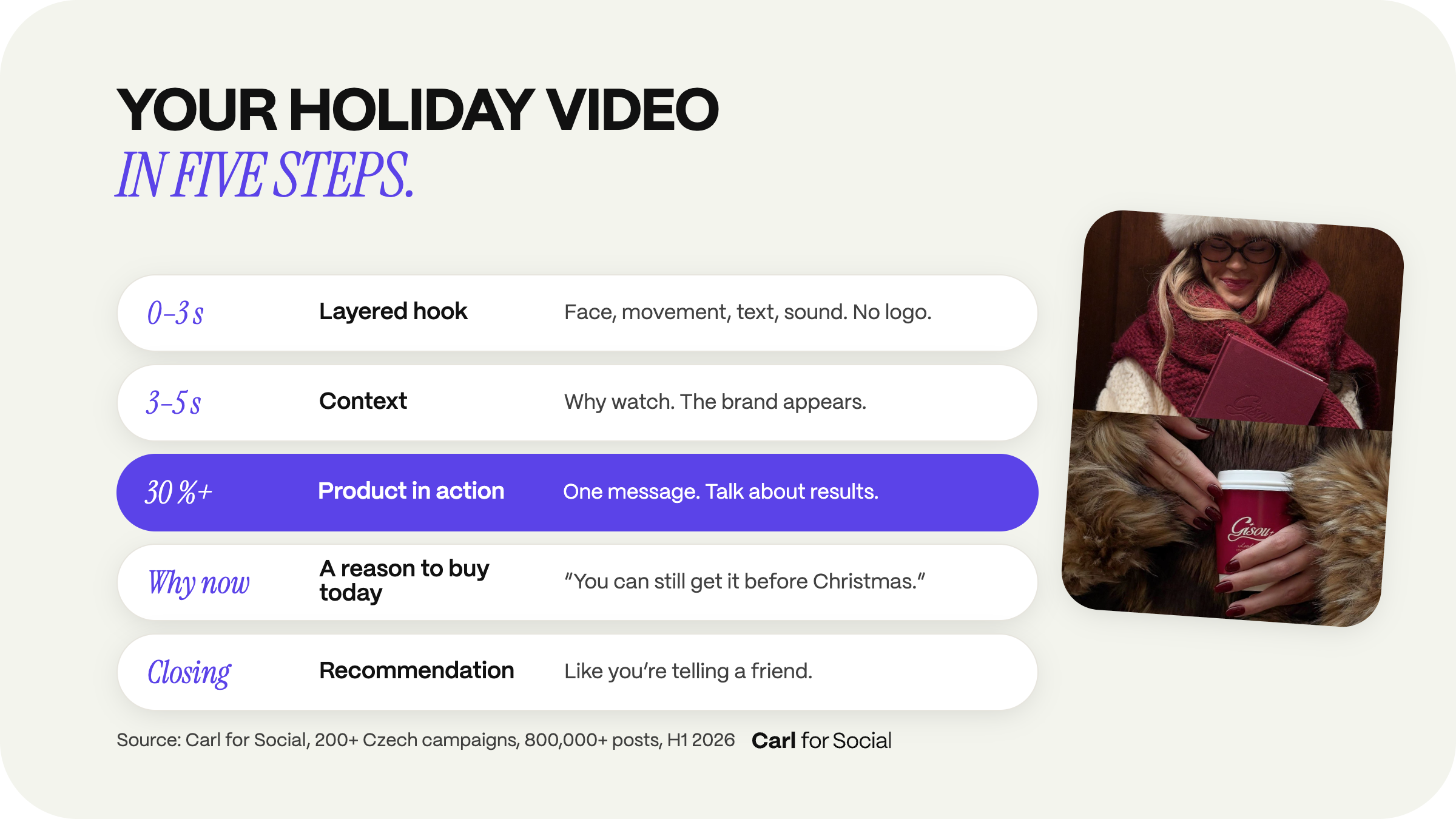 Notice the second-to-last step. The “why now” reason changes over the season: on Black Friday it’s the opportunity and a specific discount; in December it’s the promise that the gift will still arrive in time for Christmas. Then wrap up with a recommendation, not a slogan. According to our data, a call to action doesn’t affect whether people remember the brand, but it does affect whether they buy.
Rule 4: Stick to one message
This is the hardest rule for holiday videos. You want to say the product is beautiful, practical, on sale, a great gift and a limited edition. But according to our data, every additional message in a video cuts performance by 4–6%, and four messages mean −16%. The viewer ends up remembering none of it.
Pick one message and save the rest for the caption or another video. The ten-second test helps: if you can’t say in one sentence what your video is about, it has too many messages. And if the brand’s brief contains five messages, ask which one matters most.
One message doesn’t mean one product, though. A message is a theme, not a number of products. “Five gifts for a dad who loves to cook” is one message. And the gift guide is this year’s strongest holiday format. According to Traackr, it was the only one last year that grew in both posts (+20%) and attention per post (+17%), and posts with 6–10 brands in frame were saved 2.44× more often (Traackr). In December, people aren’t looking for ads. They’re looking for what to buy for whom.
Rule 5: Use original sound instead of trending music
Trending music is one of the most common tips creators hear. But the data shows that original sound, a voiceover or even silence delivers cleaner attention, especially on TikTok and Facebook. Fast music costs up to −15% in performance, and non-original audio cuts reach by up to −33%.
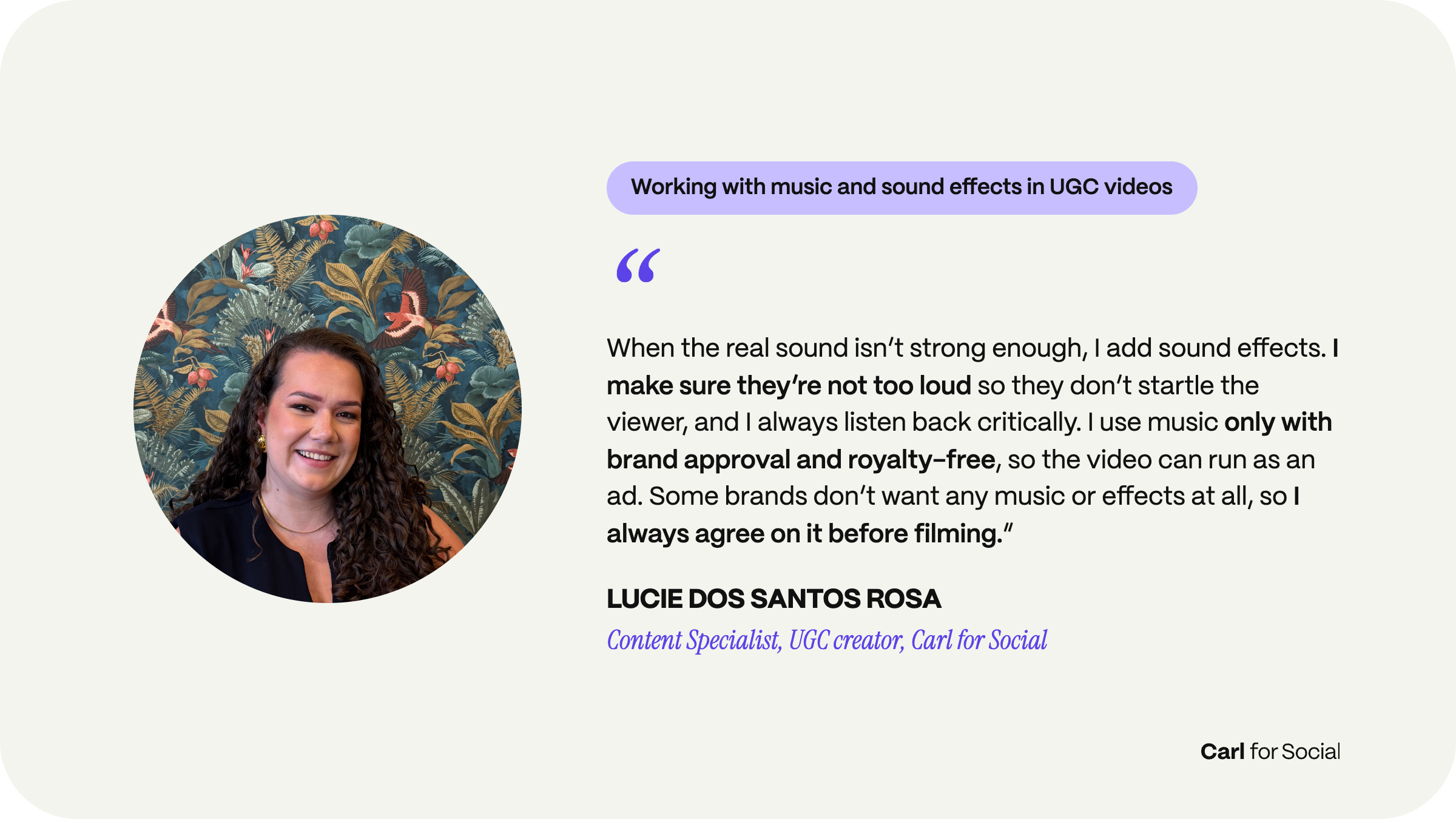
In an unboxing, keep the rustle of the paper, the box opening and your genuine reaction. That’s what turns a video into an experience. And if you do want to use music or effects, agree on it with the brand in advance, because videos with licensed music often can’t be used in ads.
 Rule 6: Shoot once, edit separately for each platform
The same video doesn’t work everywhere. According to our data, the right match of platform and mood adds +13%, while a video copied 1:1 to another platform loses up to −18%. Each platform has a different audience with different expectations, so the same content lands differently.
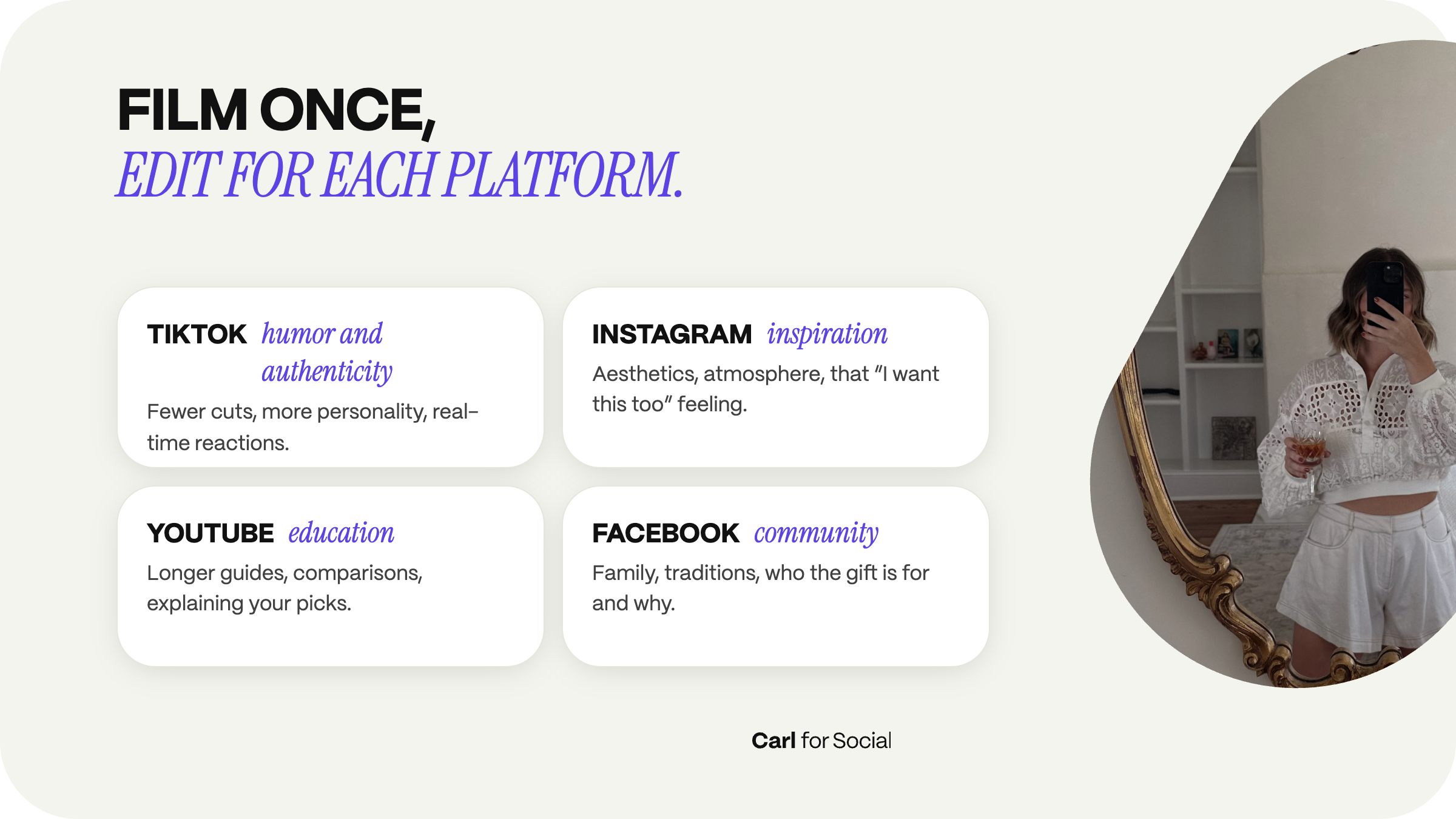 Be careful with humor, it’s not a universal recipe. It works on TikTok, but on YouTube, funny content performs 18% worse than non-humorous content, according to our data. There, people want explanations and comparisons.
You don’t have to film three different videos, though. Shoot more footage than you need: details, hands, textures and different angles. Then turn it into a slightly different video for each platform, with a different opening, edit and caption. Keep your caption around 137 characters and add at least one emoji, which adds 20–39% reach according to our data. And never upload a video with another platform’s watermark.
Rule 7: Think like the brand’s partner
The last rule isn’t about the video itself, but about everything around it. This year, we shared the same data with brands in our study Black Friday & Christmas 2026. When you know what brands are reading, you know what to show them.
You matter more than the brief. Choosing the creator affects campaign performance about 1.75× more than the best creative brief. And smaller creators have the edge: brands buy a minute of attention from them up to 44% cheaper than from big names. If you don’t have hundreds of thousands of followers, this is your season.
Conclusion
This year, the winner won’t be whoever makes the most holiday videos, but whoever prepares them best. The feed will be full, and each video will get less attention than last year. That doesn’t mean you have to post more. It means you have to post smarter.
Find your own style that nobody can copy. Give viewers a reason to stay before you show them the brand. Present the product in your own way and plan for a video of around 45–60 seconds. Stick to one message and your own voice, and make a separate edit for each platform.
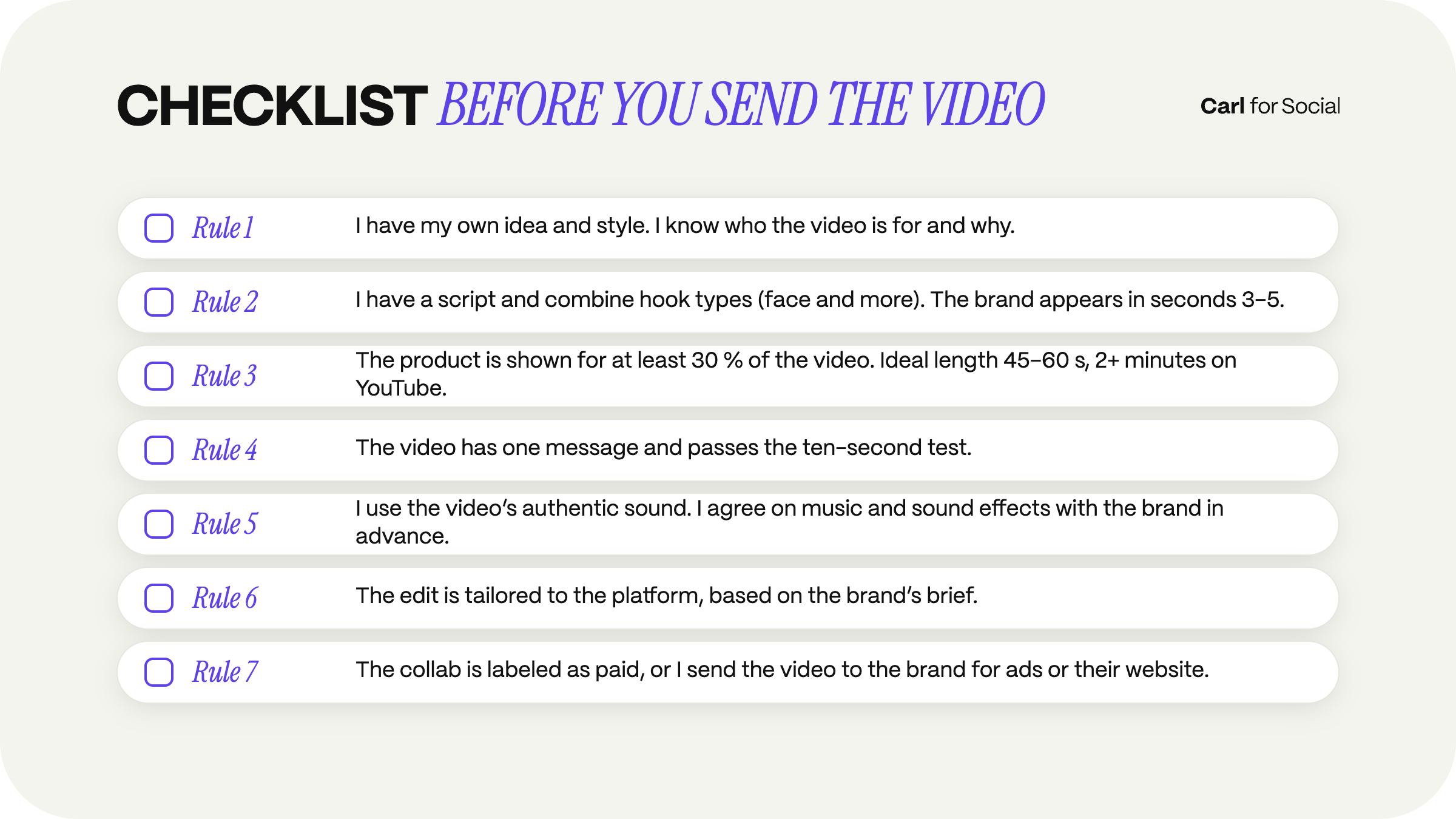
Checklist before you send your video
 Data source: Carl for Social, The Science of Attention (200+ Czech campaigns in H1 2026, 800,000+ posts). International data: Traackr, 2026 State of Holiday Season, PetaPixel.
Carl for Social
Don't miss what's coming next.
Stay on top of social media trends and tips that help you grow your content on Instagram, TikTok, Facebook, and YouTube. Download Carl for Social — it's free.
Download app