AI Is Speeding Up Advertising, but the World Cup Shows That the Strongest Content Still Happens Between People
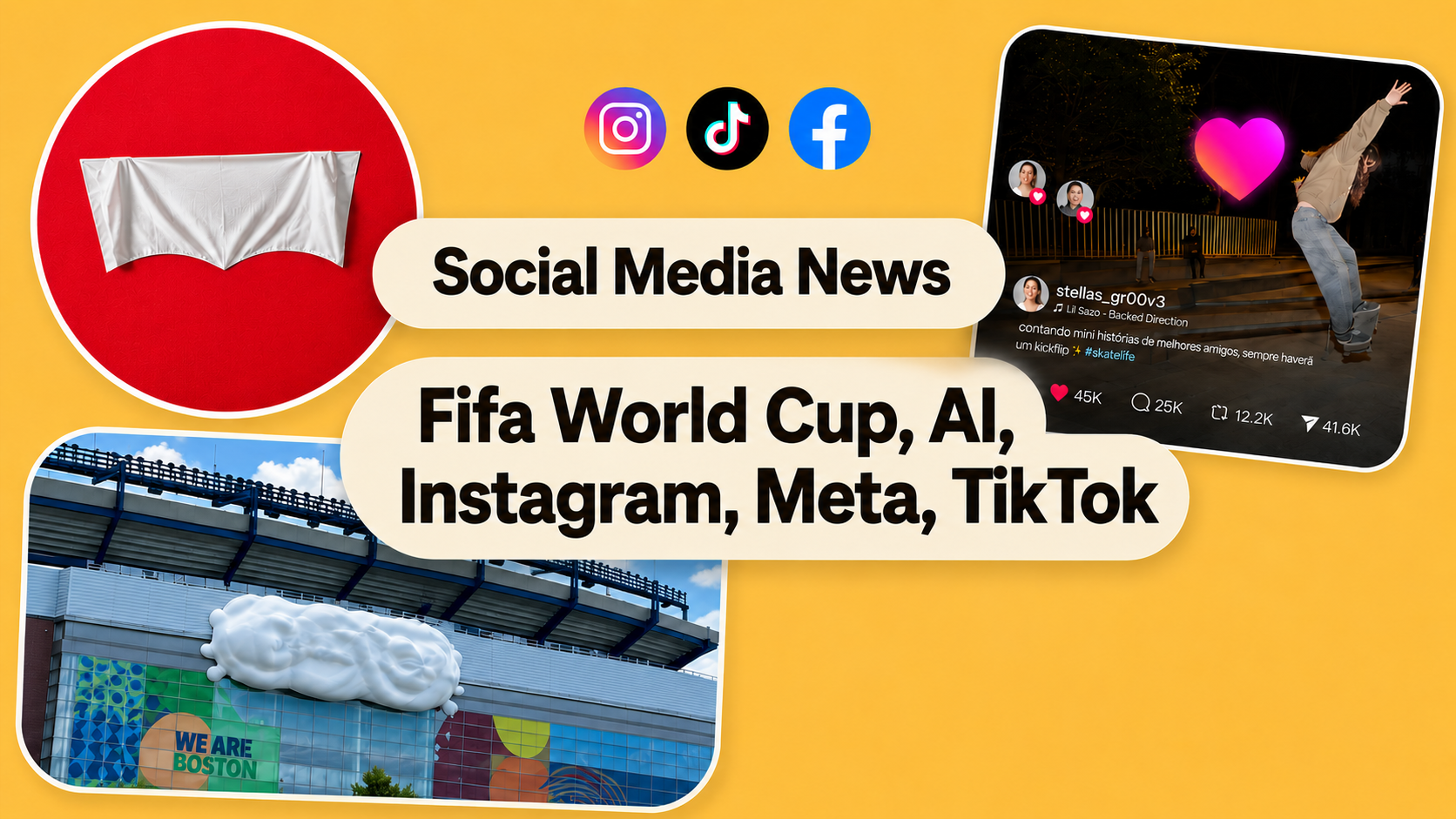
This week, social platforms once again showed where marketing is heading: faster campaign creation, AI creative, and automated creator discovery. But while Meta, TikTok, and Instagram are pushing advertising into the AI era, the football World Cup is reminding us of the other side of the same story. The biggest attention still often does not originate in Ads Manager, but in the stands, in the streets, in fan rituals, and in smart brand reactions.
Meta Is Moving AI Directly Into Ad Creation
On June 23, Meta introduced new AI advertising features. The most important new feature is brand-aware creative generation in Ads Manager. Meta wants to enable brands to generate and test creative variants faster, with outputs that better match their style, tone of voice, and visual guidelines.
At the same time, Meta is connecting its creator discovery tools so that brands can launch affiliate and creator campaigns more easily. In other words, Meta is trying to shorten the path from insight, through creative, to performance. Part of the work that used to be handled separately by teams, agencies, and production is gradually moving directly into the platform.
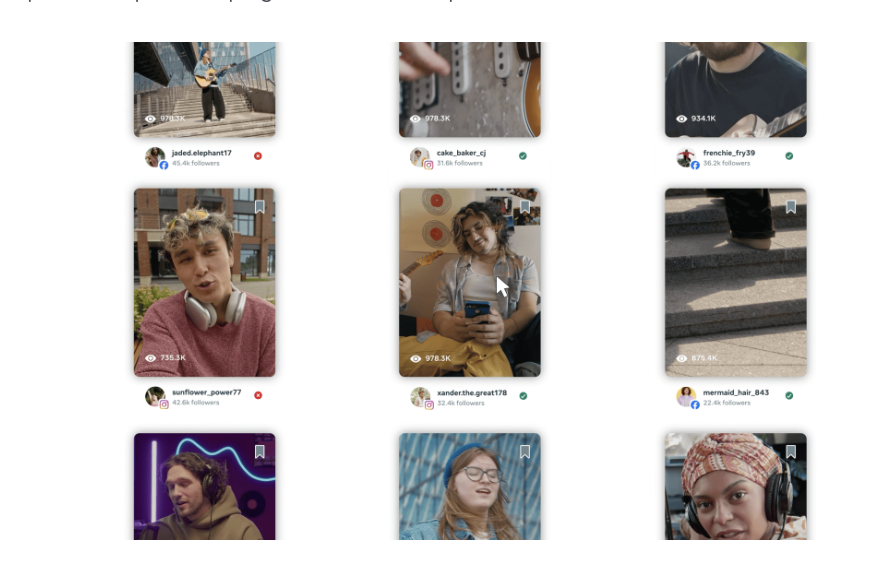 For brands, this is a major opportunity, but also a risk. AI will speed up testing and reduce the cost of producing variants. At the same time, there is a danger that campaigns will start to look alike. The advantage, therefore, will not come from the fact that a brand “uses AI.” The advantage will come from having clear positioning, quality data, a sharp insight, and a better understanding of the audience than the competition.
TikTok Introduced Symphony Agent: AI for TikTok-First Campaigns
At Cannes Lions, TikTok introduced Symphony Agent, an agentic AI tool for campaign creation, finding relevant creator content, and creator discovery across markets. TikTok says the tool combines brand objectives, platform signals, top-performing content, and current trends. It is also supposed to include AI labels, invisible watermarks, and moderation filters. TikTok is not only selling reach here. It is selling speed of cultural response. It is telling brands: we will help you identify a trend, translate it into a TikTok format, find suitable creator content, and scale the campaign across markets.
That is an important shift. TikTok is no longer just a platform for distributing videos. It is becoming a tool for planning, creating, and optimizing campaigns in an environment where trends change within hours. For marketers, this means fewer large hero campaigns and more fast, local, social-native variants.
Instagram Moves Onto TV: Social Video Leaves the Mobile Screen
Instagram expanded Instagram for TV to Samsung Smart TVs in the United States. Meta is also testing interest-based channels, casting Reels from a phone to a TV, Stories on the big screen, horizontal video, longer creator content, episodic series, and Live on TV. Instagram is testing whether social video can also work as shared home entertainment. Not just as a fast mobile scroll, but as a lean-back experience on the big screen.
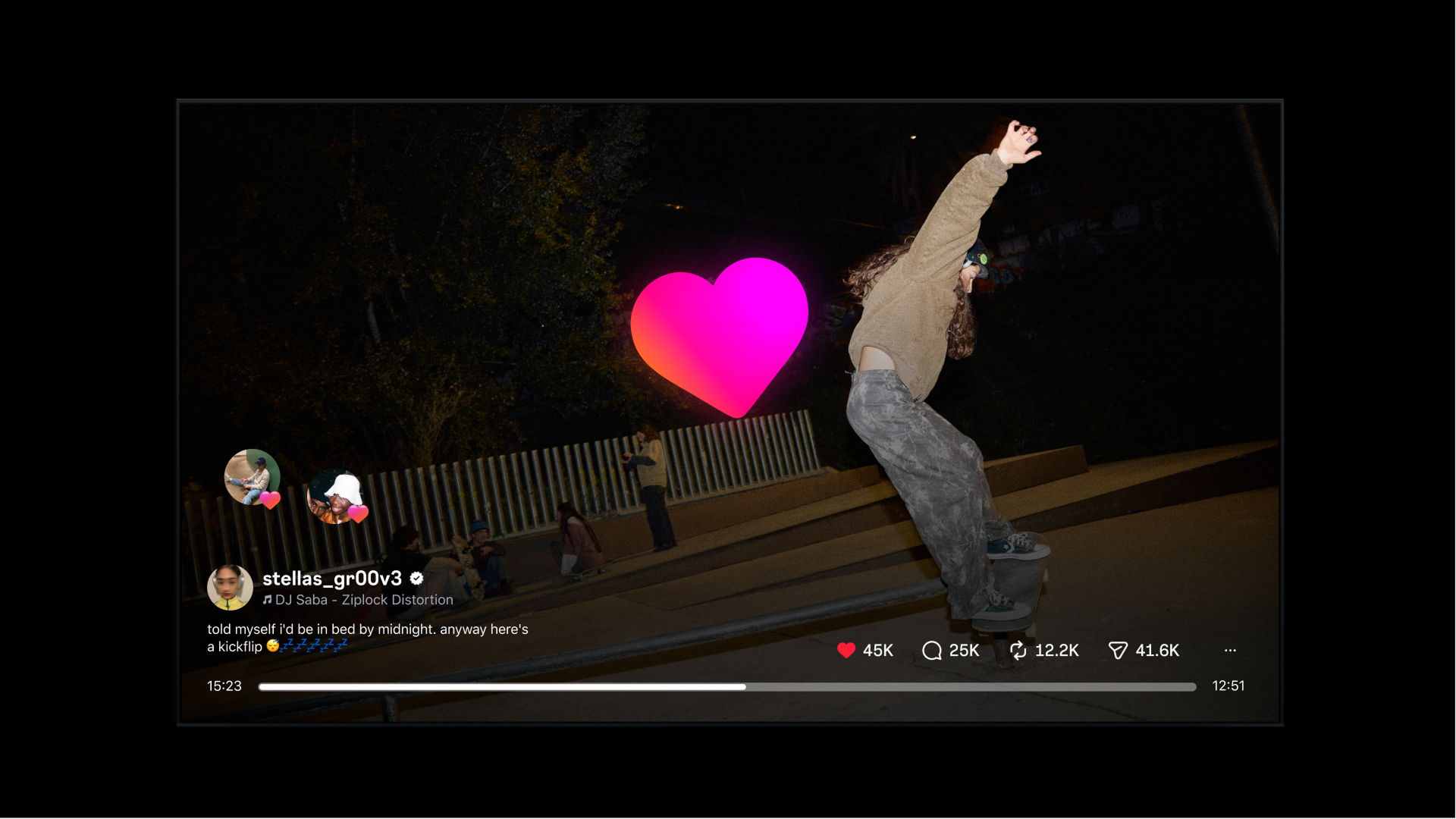
For brands, this is a signal that the boundaries between social video, streaming, connected TV, and creator entertainment are continuing to blur. Reels no longer have to be content only for a phone in someone’s hand. Part of social content may gradually move into the living room, where people watch longer formats together.
Research: People Do Not Want to Hear That Everything Is AI
On June 24, Marketing Brew published data from research by The Harris Poll, the 4As, and Infillion. According to the research, 78% of consumers say AI makes ads less authentic. 73% would trust an ad less if they suspected it had been created by AI. And 63% would be less likely to buy from a brand using AI-generated ads.
That is the key tension of the whole week. Platforms are pushing AI into advertising production, but consumers often read it as a signal of inauthenticity.
Brands should therefore avoid making AI the main message. AI can help behind the scenes: with testing, variants, research, localization, or faster production. But externally, human insight, real emotion, creators, cultural relevance, and trust still have to win.
World Cup Stories Are Dominating Media, Social, and Marketing
The strongest stories from the World Cup so far are not coming from classic advertising. They are coming from the stands, the streets, watch parties, and small absurdities that social networks pick up on by themselves.
One of the most striking examples is Norway and its Viking Row. After a 3-2 win over Senegal, Norway advanced to the knockout stage and fans and players launched a synchronized celebration that quickly turned into a national meme.
It started as a team and fan choreography. Within a few days, however, it became a visual symbol of Norway’s tournament run. The celebration is also led by captain Martin Ødegaard, and reactions to it have spread far beyond Norway. In Sweden and Denmark, some commentators saw the Viking Row as a provocation or as a copy of Iceland’s thunderclap.
The story became even stronger when Norwegian fans, after qualification, marched through the night to the palace and wanted to wake King Harald. Hundreds of people then performed the Viking Row again outside the palace.
From a marketing perspective, what is interesting is that this is not a classic campaign. It is a fan ritual. It is simple, visual, easy to imitate, and distinctive enough to work in Reels, TikToks, and TV highlights. These are exactly the kinds of moments that spread best on social media.
In the previous edition of our social world update, we wrote about Levi’s response to FIFA rules that, during the World Cup, ban commercial stadium names belonging to brands that are not official tournament partners. Levi’s Stadium was therefore renamed San Francisco Bay Area Stadium for the purposes of the tournament, and the brand’s signage had to be covered. But Levi’s did not turn it into a problem. It turned it into content.

The brand used the covered sign as its own visual motif, changed its Instagram profile picture, and transformed the restriction into a joke that fit perfectly with its brand asset. The point was simple: when someone bans you from showing your logo, you can still show your shape, your style, and your brand confidence. And Levi’s was not the only one.
Gillette had to deal with a similar problem. Its home venue, Gillette Stadium, was renamed Boston Stadium during the World Cup, and Gillette branding had to disappear from visible surfaces. But the brand turned the mandatory cover-up into a product joke.

Instead of simply letting the logo disappear, Gillette worked with a visual that resembled shaving foam. The accompanying point was along the lines of: if we have to cover the logo, at least we could choose how.
This is exactly the kind of real-time marketing that works because it is not overdone. Gillette did not try to fight FIFA. It did not try to present itself as a victim. It used its own category, its own product association, and its own distinctive asset.
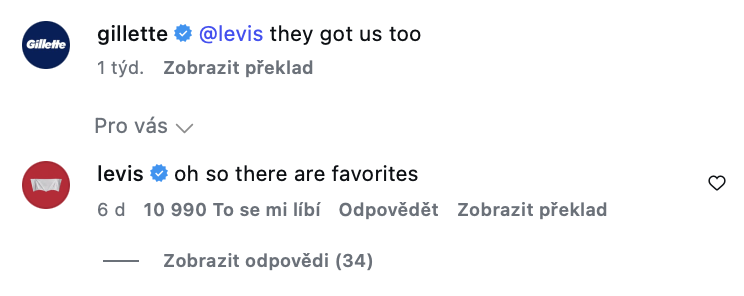
The result was not a classic ad. The result was a moment that people wanted to share.
Levi’s and Gillette show the same lesson: a restriction can become a creative advantage. Most brands in a similar situation would deal with lawyers, approval flows, and internal frustration. The best brands, however, know how to turn a limitation into a story. Not because they have a bigger budget, but because they have a clear brand, a recognizable visual language, and a team that knows how to react quickly.
Carl for Social
Don't miss what's coming next.
Stay on top of social media trends and tips that help you grow your content on Instagram, TikTok, Facebook, and YouTube. Download Carl for Social — it's free.
Download app