6 Marketing Campaigns Everyone’s Talking About
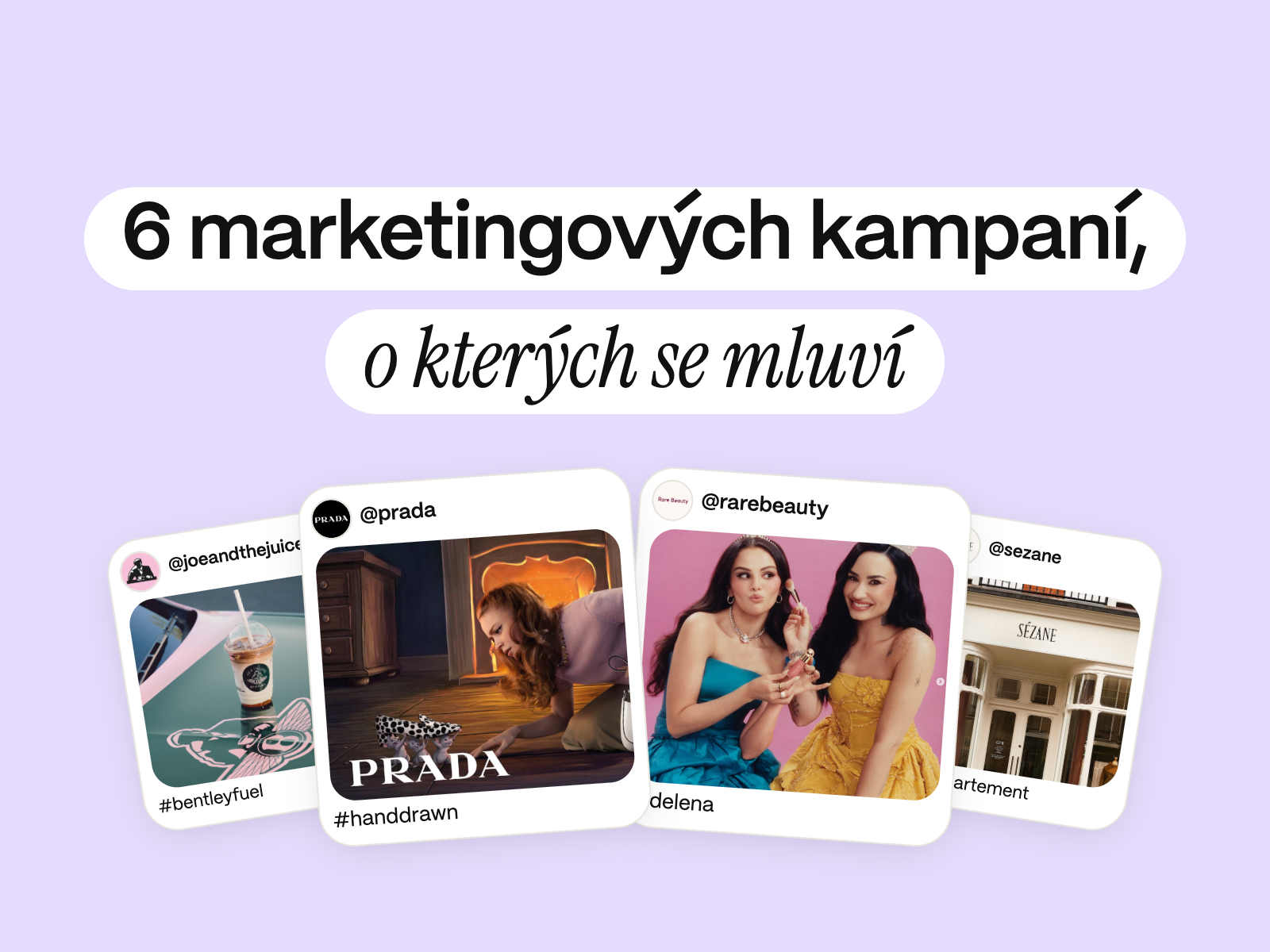
The holidays are around the corner, and brands are bringing out the big guns. Prada went back to pencil and paper, Selena Gomez and Demi Lovato reunited on camera after years apart, and McDonald's locked in with fantasy book fans. We picked 6 campaigns that prove the strongest marketing today doesn't look like advertising. It looks like an experience, a story, or a moment everyone is talking about.
The end of the year is marketing's Super Bowl. Everyone wants attention, everyone has a budget, and everyone is shouting at the same time. So who wins? Not the loudest brands, but the smartest ones.
The campaigns we picked have one thing in common: they aren't built around a product, they're built around a feeling. Nostalgia, friendship, fandom, an experience you can't get anywhere else. Some cost millions, others could be pulled off on a much smaller budget. And that's exactly the point of this list: what you can take away from them, even if you're not Prada.
1. Prada: Holidays Drawn by Hand, Not by AI
What it is: For Holiday 2026, Prada made a move that feels almost rebellious today. Its campaign Drawing Prada: Animated by Hand blends Glen Luchford's photography with hand-drawn animation. Behind it is John Pomeroy, the Disney veteran who worked on Pocahontas and Fantasia 2000, who brought in fellow animators from the era of The Lion King and Aladdin. Stars like Sadie Sink, Maya Hawke, and Kelvin Harrison Jr. find themselves in snowy fairytale scenes: a trio of mice steals Sadie's polka-dot loafers, and a cheeky fox trails Maya through the snow.
Why it works: At a time when the internet is flooded with generated content, and Coca-Cola has faced a wave of backlash over its AI holiday ads, "drawn by hand" is a powerful message on its own. Prada never mentions AI. It doesn't have to. Creative Bloq went as far as calling it a lesson for Coca-Cola. Craft, childhood-cartoon nostalgia, and a human touch add up to exactly the kind of holiday emotion people want to share.
The takeaway: When everyone is heading in one direction, the boldest move is to go the other way. And show who's behind the work. People want to see the hands, not just the result.
2. Rare Beauty: Selena and Demi Are Back Together, and the Internet Is in Tears
What it is: Selena Gomez and Demi Lovato have known each other since they were seven, when they met on the set of Barney & Friends. They went on to rule the Disney Channel, film YouTube vlogs together, and co-star in Princess Protection Program. Then came years of distance. Now things are different: on October 28, Rare Beauty launched the Delena Soft Pinch Blush Bundle, a set of two liquid blushes in each singer's favorite shade. The "Still Making Each Other Blush" campaign recreates their iconic poses from Princess Protection Program. In the video, they film a vlog again in a bedroom covered in posters from their teenage years. Forbes breaks it all down.
Why it works: This isn't a product with two celebrities attached. It's a storyline fans have been following for almost twenty years. Their reconciliation already played out publicly in April at Demi's concert, so the campaign landed exactly when people were waiting for it. It also fits the brand's DNA: both women speak openly about mental health, and Rare Beauty donates 1% of sales to the Rare Impact Fund. A friendship that survived a rough patch is the perfect story for this brand.
The takeaway: The strongest partnerships aren't built on reach, they're built on relationships. Find creators who share real history with your brand or with each other, and let your audience fill in the rest of the story.
3. McDonald's UK: Locking In with ACOTAR Fans
What it is: At the end of October, the sixth installment of Sarah J. Maas's fantasy series A Court of Thorns and Roses hit shelves, the first in five years. For fans, that means only one thing: lock yourself in at home and don't come out until you've finished. McDonald's UK jumped on this with an Instagram post that made the "lock in" moment its own. The message is simple: you read, we'll handle the food.
Why it works: BookTok is one of the most powerful communities on the internet today, and ACOTAR sits at the very top of it. McDonald's didn't invent its own occasion; it joined one fans were already celebrating. It speaks their language, gets their jokes, and shows the brand knows what's happening in culture right now. This is reactive marketing at its best: fast, cheap, and spot on.
The takeaway: You don't need your own big event. You just need to know what your audience is excited about and show up as a natural part of the experience. The fandom calendar (premieres, book releases, concerts) is a goldmine for social media.
4. Sézane: A Store That Feels Like Your Parisian Friend's Apartment
What it is: French brand Sézane opened a new L'Appartement in London's Chelsea, its third address in the city after Notting Hill and Marylebone. The L'Appartement concept is classic Sézane: no traditional racks, but a space styled like a home with vintage furniture, flowers, a communal table, and its own soundtrack. Each one is tailored to its neighborhood, but the Parisian spirit stays the same.
Why it works: Sézane started as an online brand that founder Morgane Sézalory launched by selling vintage pieces on eBay. It built its entire reputation on social media. For Sézane, a physical store isn't just another sales channel; it's a place where fans can step inside the Instagram feed they've been scrolling for years. People don't just go there to shop. They go to take photos, share them, and spend the afternoon.
The takeaway: A brick-and-mortar store can be the most powerful content platform you have. When you design a space or an event, ask yourself: would someone want to take a photo here and send it to a friend?
5. REFY: Don't Wait for New Year's Eve, Today Is the Occasion
What it is: British beauty brand REFY, founded in 2020 by Jess Hunt and Jenna Meek, launched its holiday campaign "Today is the Occasion". Instead of models and glittery parties, it turned to real women from its community and asked what their ideal day looks like. The point? Don't wait for the perfect moment, the big event, or "when it's worth it." Do your makeup and enjoy it today.
Why it works: For most brands, December is about one night: Christmas Eve or New Year's Eve. REFY flips that logic and says you don't need to save your lipstick for a special occasion. That's smart on two levels. Emotionally, it resonates with people who are tired of the pressure to have "perfect holidays." Commercially, it expands product use from one night to every day. And because the voices are women from the community, not actresses, it feels genuine. REFY has been doing this for a while: last year's "Iconic Never Gets Old" campaign put older women at the center, telling their own stories.
The takeaway: Your community is your best casting call. Ask customers about their lives, not about your product, and build a campaign from their answers. It will be more honest than anything you could come up with in a meeting room.
6. Joe & The Juice × Bentley: A Smoothie That Rides in a Bentley
What it is: Danish chain Joe & The Juice and British carmaker Bentley marked one year of partnership with a limited-edition drink, Bentayga Fuel by Bentley. It's built on Brain Fuel with lion's mane mushroom, plus Joe's new vanilla and a touch of sea salt. The partnership started even more wildly: in September 2025, Bentley unveiled a Bentayga SUV in both brands' pink and green with a built-in mobile coffee bar in the trunk, complete with a grinder, espresso machine, and fridge.
Why it works: On paper, it makes no sense. A fast-casual juice bar and ultra-luxury cars? But that contrast is exactly what makes it fun and memorable. Joe & The Juice borrows Bentley's premium status, while Bentley reaches a younger urban audience that won't buy the car (yet), but will buy the smoothie. And a pink Bentayga with an espresso machine in the trunk is content that shares itself.
The takeaway: A great collab doesn't have to pair similar brands. Often all you need is a shared value (here, quality and experience) and the courage to try an unexpected combination. The more it surprises people, the more they talk about it.
What Brands and Creators Can Take Away
If we had to sum up all six campaigns in one sentence: people don't want ads anymore, they want a reason to stop scrolling. And those reasons keep coming back:
- The human touch wins. Prada showed that in the age of generated content, "made by hand" is a message in itself. REFY gave the mic to real women instead of models.
- Relationships beat reach. Selena and Demi work because people know their story and feel it. It's not about how many followers a creator has, but what connects them to your brand.
- Be where your audience already is. McDonald's didn't invent its own event, it simply joined the one ACOTAR fans were celebrating. The fandom calendar is a goldmine.
- Physical spaces are content. Sézane builds stores like apartments, where people come to hang out and take photos. Every corner of the store is a potential post.
- Dare to make unexpected pairings. A juice bar and Bentley? Why not. The more surprising the match, the more people talk about it.
The best campaigns today don't look like ads. They look like a fairytale, a reunion of old friends, an afternoon in a Parisian apartment, or an inside joke only true fans get. If you put a piece of real life, a real story, or real courage into your next campaign or creator collab, people will notice on their own.
Carl for Social
Don't miss what's coming next.
Stay on top of social media trends and tips that help you grow your content on Instagram, TikTok, Facebook, and YouTube. Download Carl for Social — it's free.
Download app