YouTube Creative Capital Report: what brands and creators should take away
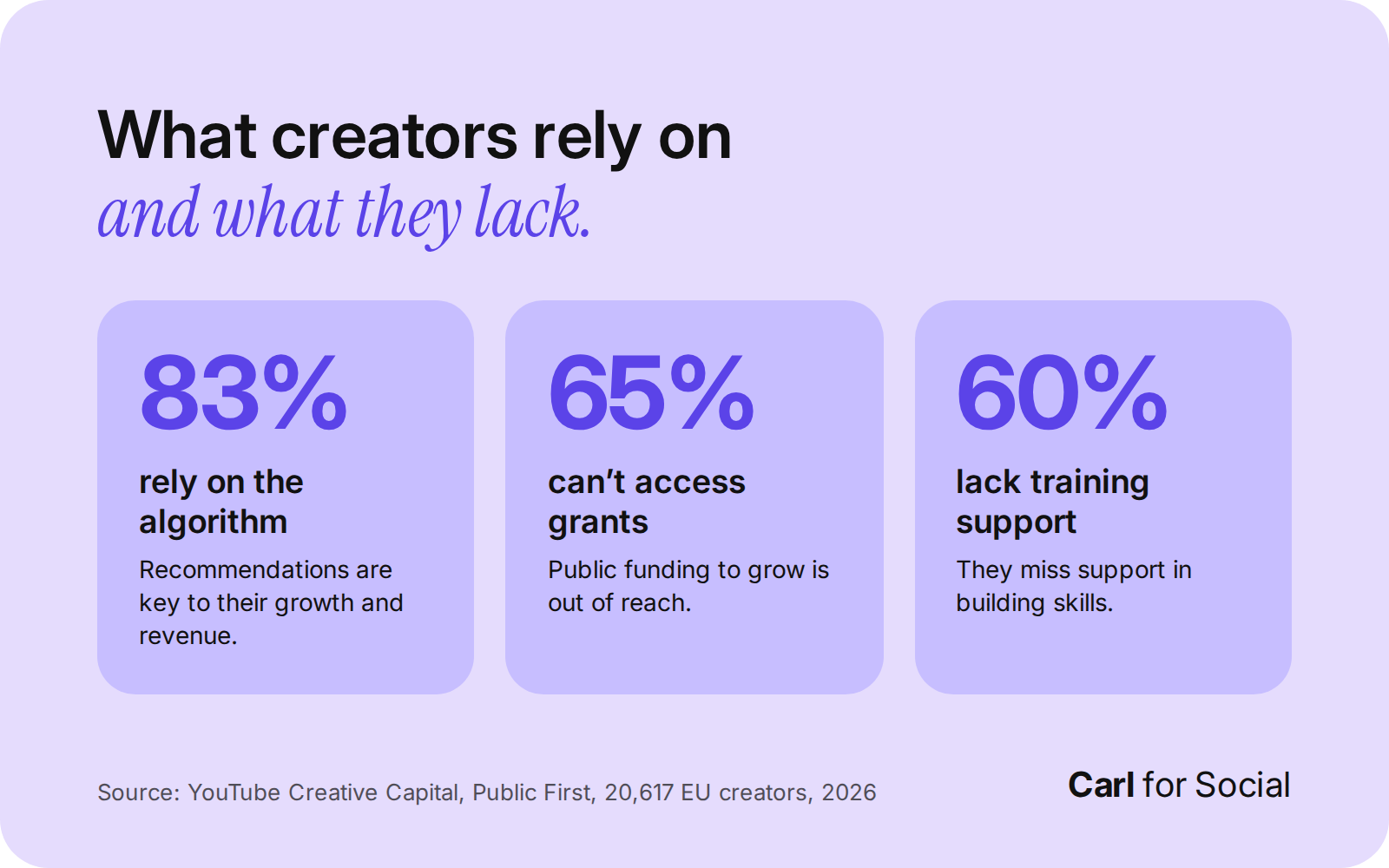
More than 20,000 creators across the EU told YouTube what they’re missing. 83% rely on the algorithm and 65% can’t access grants. What does that mean for brands, and what does it mean for creators?
Content creators today hire editors and camera operators, pay for studios and negotiate contracts with brands. They operate like small media companies, yet the people around them often don’t take them seriously. Austrian YouTuber Leila Gharani, who has 3.1 million followers, describes what that looks like in practice.
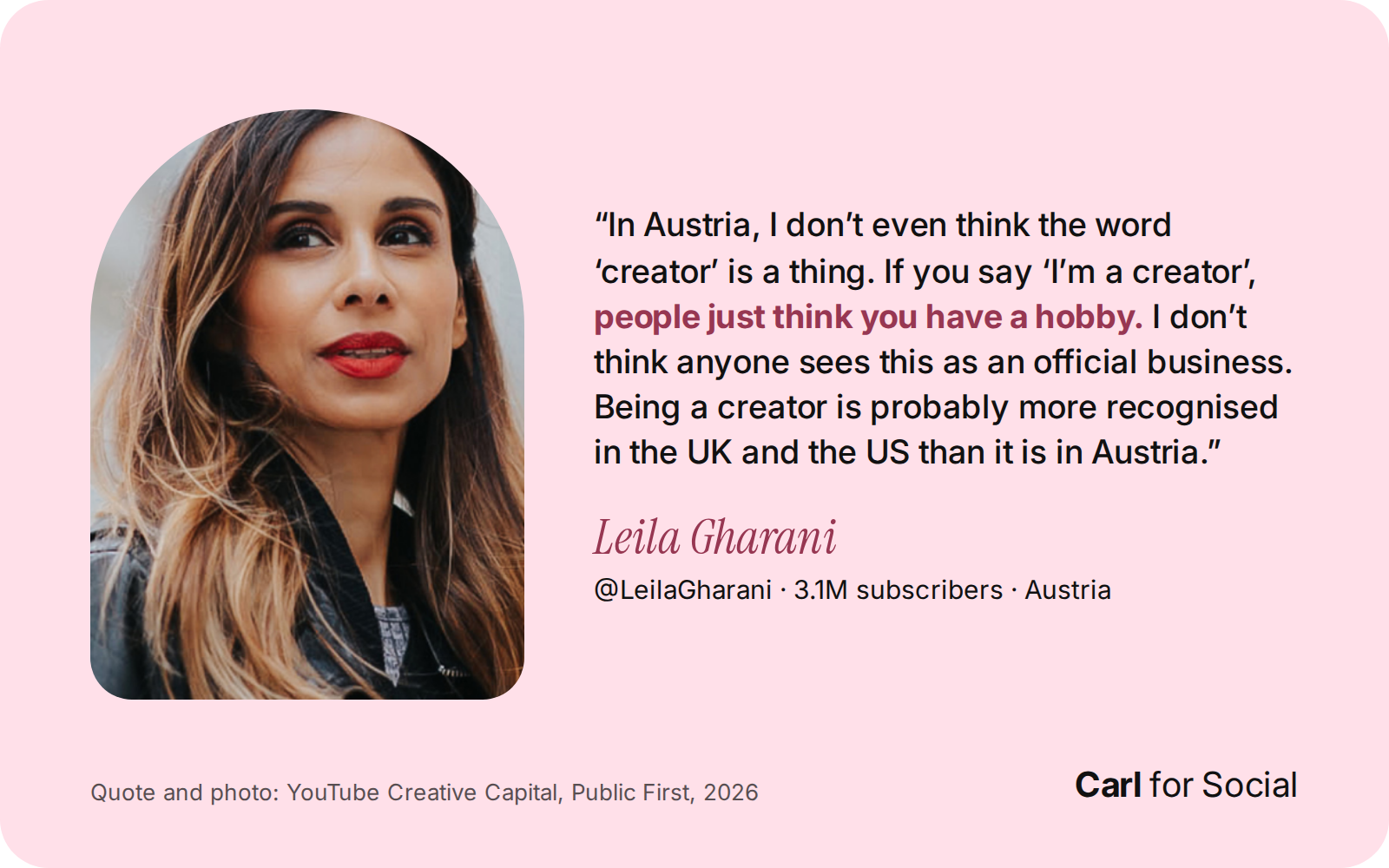 According to a new YouTube report, many creators across Europe have had a similar experience. In summer 2026, YouTube asked creators from all 27 EU countries what helps them and what holds them back. 20,617 of them responded, from newcomers with a few thousand followers to channels with millions of subscribers. The survey was run by the independent consultancy Public First and complemented by 20 in-depth interviews. The Creative Capital report was published on 12 October 2026.
The report is aimed at policymakers, but most of its findings also apply to how brands and creators work together. So we’ve picked out what matters most for both sides: first for brands, then for creators.
The report in numbers
In 2025, creators on YouTube added more than €8.4 billion to EU GDP and supported over 220,000 full-time equivalent jobs. That’s according to an analysis by Oxford Economics. Creators in the YouTube Partner Program also receive more than half of the revenue their channels earn.
Behind the numbers, however, lies a paradox. Creators are economically strong, yet they feel left out of the system. They lack funding to grow, facilities and recognition, and their income depends on a single distribution channel.
 What brands should take away
The creator you work with isn’t a hobbyist with a phone. They run a small media company, so treat them like one.
1. Creators are entrepreneurs, not fans
66% of creators who earn money from their content reinvest it in quality. They hire editors, camera operators and producers, and pay for studios. A fair fee isn’t a favour, it’s the price of a whole team’s work.
2. Creators will start vetting you
The report proposes that the European Commission, together with creators and advertisers, set up a system that lets creators check the companies commissioning partnerships. The aim is clear contracts, transparent terms and on-time payment. A reputation as a reliable partner will become a competitive advantage.
3. Give creators creative freedom
83% of creators say recommendation algorithms are key to their channel’s growth and revenue. A video that feels like an ad will struggle to get picked up by the algorithm. A good brief protects the message and the boundaries, not every single word.
4. Smaller creators are an untapped opportunity
65% of creators can’t access public grants, and their income often fluctuates. A creator from Bulgaria asks in the report for a fair chance for smaller channels, which struggle to grow without algorithmic recommendations. A long-term partnership gives them security they won’t find elsewhere. For a brand, it means a more loyal audience and better value for money than a one-off post from a big name.
5. Local creators open doors to the world
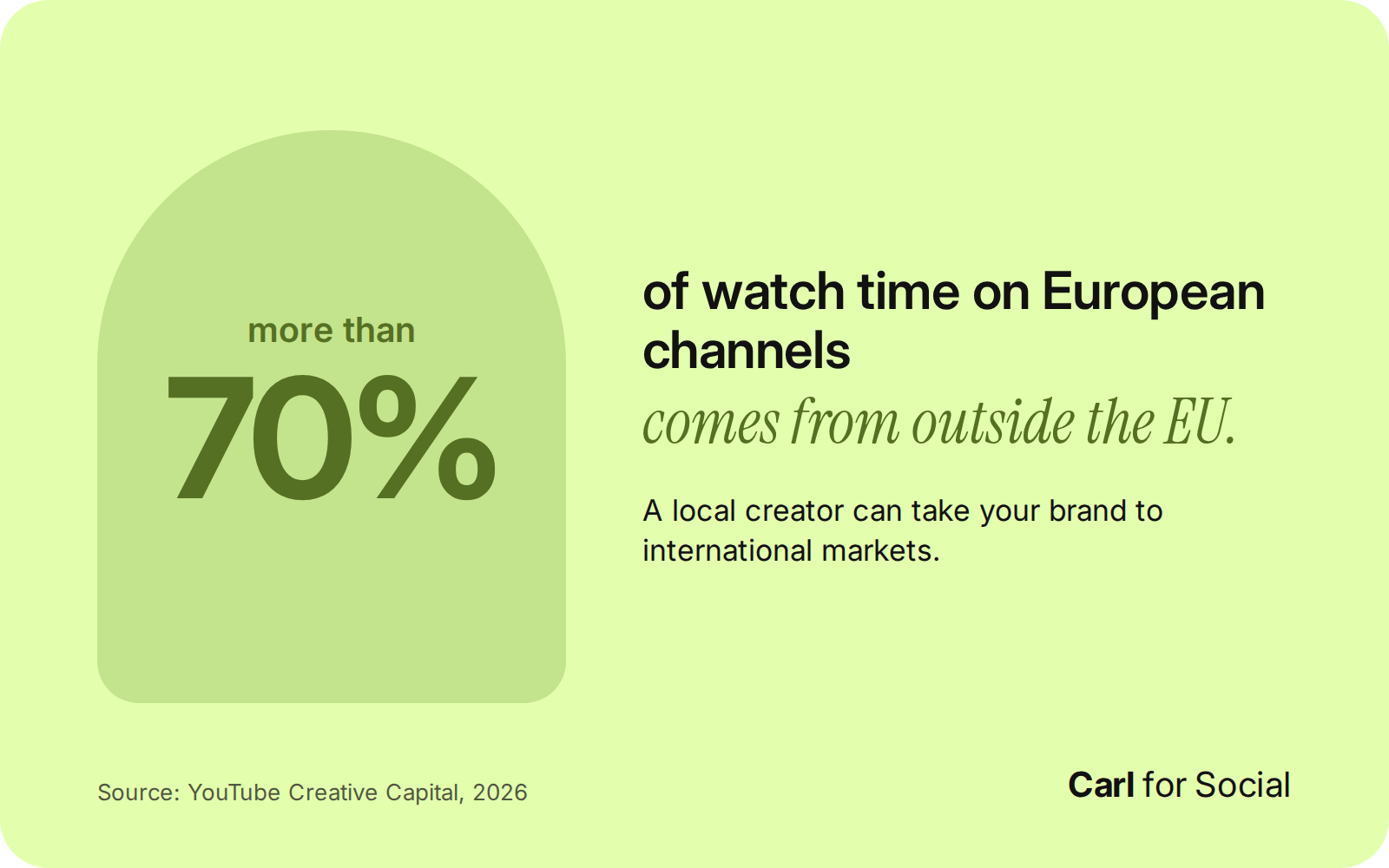
More than 70% of watch time on European channels comes from outside the EU. A local creator can take your brand to markets abroad.
 What creators should take away (UGC creators and influencers)
For creators, the report boils down to one thing: act like a business, not like talent waiting for a lucky break.
1. Don’t treat your work as a hobby
A creator from Romania says in the report that people still see content creation as a hobby, even though creators build real audiences, communities and businesses. You are the one who can change that perception fastest. Have a media kit, a rate card and proper invoicing, and a contract for every partnership.
2. Vet your partners and terms
The very proposal to verify companies that commission partnerships shows that not every partner plays fair. Before each collaboration, get the scope of work, content rights and payment date confirmed in writing. It also helps to know the different partnership models, from product gifting to long-term ambassadorships.
3. Don’t build all your income on the algorithm
71% of creators with more than 100,000 subscribers say a drop in reach would hit their income and growth. Spanish YouTuber Alberto (@VisualPolitik, 3.8M subscribers) warns that the planned EU rules would hurt small European creators the most.
4. Learn the business, not just editing
60% of creators lack support with training. French creator Grégoire (@MajorMouvement, 1.54M subscribers) sees finding and training people who can genuinely help him as the hardest part of his job. That’s why the report also recommends courses in business, legal and financial skills. A good place to start is learning to read a brief and agreeing a realistic timeline with the brand.
5. Keep an eye on what the EU is planning
The team behind the Dani Verdari channel (2.3M subscribers, Germany) says raising money to grow the channel was much harder in the EU than in the US. The report therefore proposes opening the Creative Europe MEDIA programme to creators, launching Erasmus+ exchanges and building shared studios in the regions. For now these are only recommendations, not ready-made programmes, but they’re worth following.
Conclusion
European creators act like entrepreneurs and want everyone to treat them that way: governments, media and brands alike. They have the economic weight to back it up. Creators on YouTube alone added more than €8.4 billion to EU GDP in 2025.
For brands, the report offers a simple recipe: a fair fee, a clear brief and contract, on-time payment and creative freedom. For creators: a professional approach and more income streams than just the algorithm.
That’s exactly what we’re building at Carl for Social. Creators find partnerships with clear terms in the app, and brands use the platform to choose creators, launch campaigns and see what they delivered.
Sources
- Creative Capital: A proposal for unlocking the EU Creator Economy (full report, PDF), YouTube and Public First, October 2026
- What 20,000 creators told us about unleashing Europe’s potential, YouTube Blog, 12 October 2026
Carl for Social
Don't miss what's coming next.
Stay on top of social media trends and tips that help you grow your content on Instagram, TikTok, Facebook, and YouTube. Download Carl for Social — it's free.
Download app