The First Stars of the World Cup, Including the Duck, and Social Media as a Primary Source of News
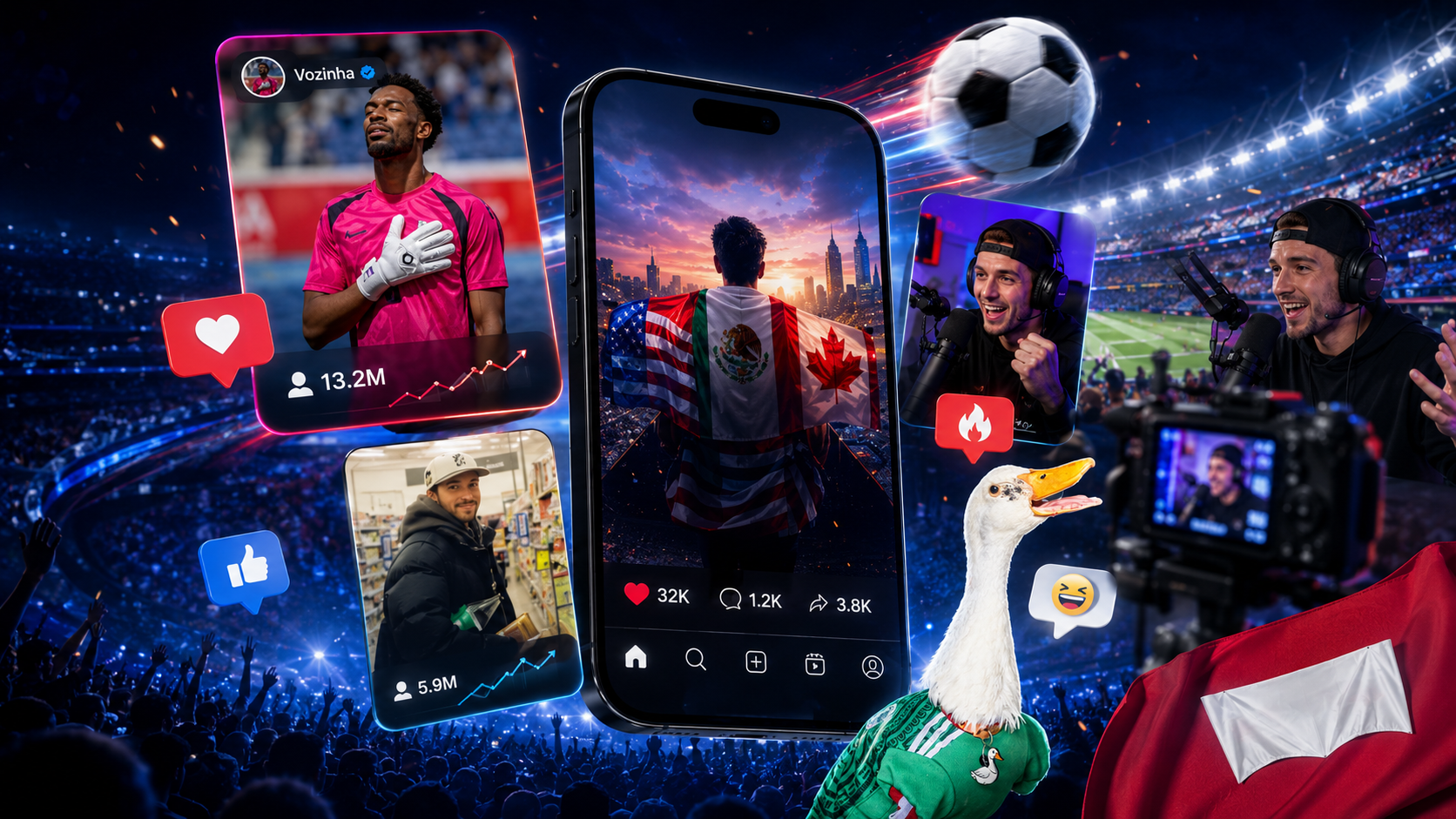
The world of social media is being dominated by the ongoing World Cup, which has already produced new global stars. In our regular weekly summary, we will also look at a new Reuters report confirming that social media is becoming the main source of news.
Social media is now the main distribution channel for news
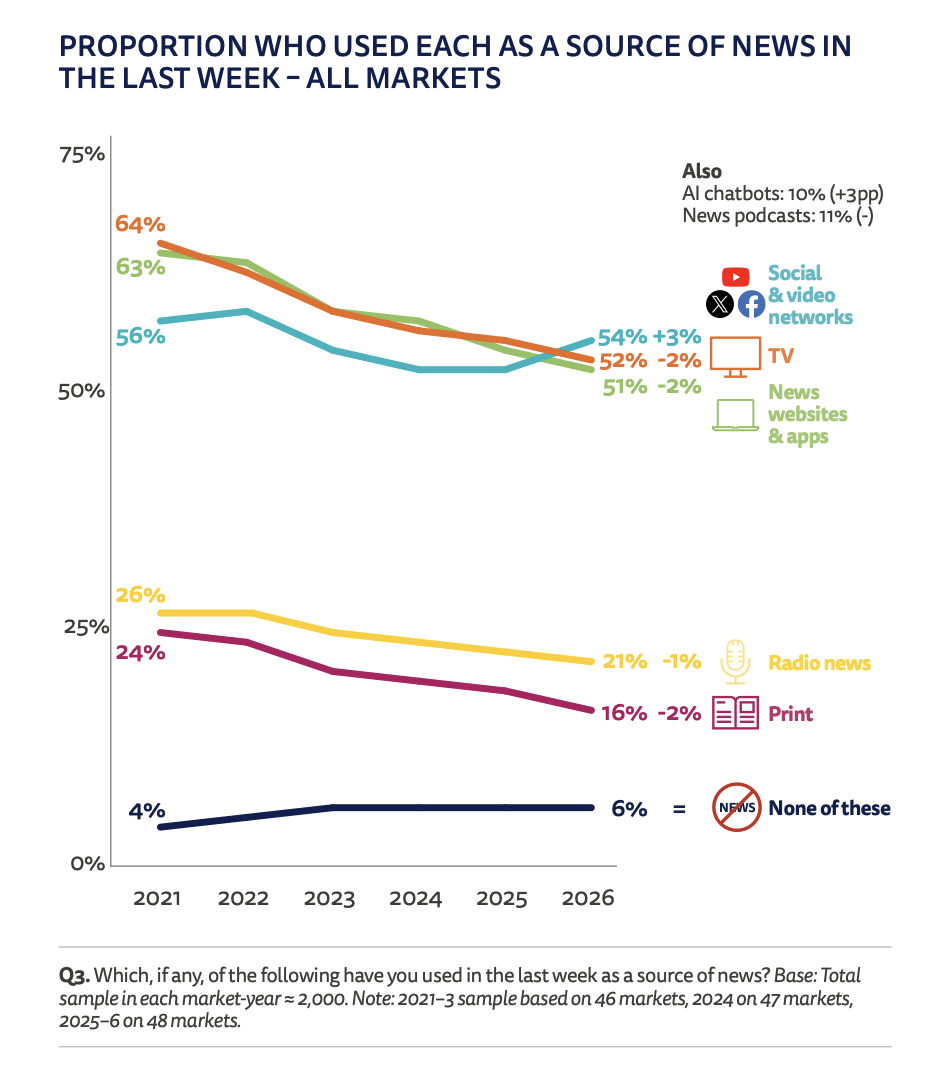
In its Digital News Report 2026, the Reuters Institute describes a major turning point in the way people consume news. Globally, social and video platforms have overtaken both television and news websites as sources of news. According to the report, 54% of respondents got news from social media and video platforms in the week before the survey, compared with 52% from television, 51% from news websites and apps, and 21% from radio. If AI chatbots are included, the share of digital platforms as a source of news rises to 56%.
Importantly, this is not just about the further growth of Facebook or traditional social networks. News is increasingly moving into video environments, to YouTube, TikTok, Instagram, podcasts and personalities whom audiences follow directly. The Reuters Institute confirms a trend that is crucial for both media and marketers: audiences no longer go primarily to media homepages for information. They receive information through platforms, algorithms, recommendations and trusted faces.
The report also shows broader news fatigue. According to the Reuters Institute’s summary of findings, the share of people who say they are not interested in news has risen from 16% in 2021 to 25% in 2026. The share of people who say they are “extremely” interested in news has, by contrast, fallen from 59% to 43%. For media organisations, this creates a double problem: people are moving to platforms, while part of the audience is actively turning away from news.
Instagram gives people more control over the algorithm
Instagram has expanded its Your Algorithm feature to the main feed. Users can now see the topics Instagram believes they are interested in and can edit those topics. The feature was first tested in Reels in October 2025, later expanded to the Explore feed, and in June 2026 it reached the main feed as well.
The key point is that users no longer influence the algorithm only indirectly through likes, follows, watch time or sharing. Instagram is beginning to show people which content categories the system places them in and allows them to say what they want to see more of and less of. This is a shift from a purely implicit algorithm towards a model in which users have at least partial control over how their feed is assembled.
Adam Mosseri, the head of Instagram, has long argued that the shift towards AI recommendations has weakened the original importance of following accounts. In the past, the decisive factor was whom a person followed. Today, the feed is increasingly shaped by recommended content from accounts the user does not follow at all. The Your Algorithm feature is therefore meant to reduce the feeling that the feed simply “happens” to users without them being able to actively influence it.
YouTube is testing private messages again
YouTube is expanding in-app video sharing and messaging, meaning the ability to share videos and discuss them directly inside the app. From 10 June 2026, the feature is being rolled out in the United States and other global markets for users over the age of 18. YouTube says people will be able to share videos, Shorts and livestreams directly in the app and react to them in real time.
More specifically, the feature is available only in selected countries and regions, including the United States, the United Kingdom, Brazil, Singapore and a number of European countries. YouTube Help also lists the Czech Republic, Slovakia, Poland, Germany, France, Italy, Spain and Sweden. Users must be over 18, signed in to a channel, and in some cases must verify their age.
The connection mechanism is also important. This is not an open chat with strangers. While watching a video, users can click share, select a contact or send a chat invitation through another app. The recipient can accept or decline the invitation. Invitations are valid for seven days. YouTube also says that messages may be reviewed to ensure compliance with community guidelines and safety rules.
Threads is growing and wants to become a new place for real-time debate
Meta has announced that Threads has reached 500 million monthly active users. This is an important milestone for a platform that was created as a competitor to X and is trying to become a public space for conversation, commentary on current events and thematic communities.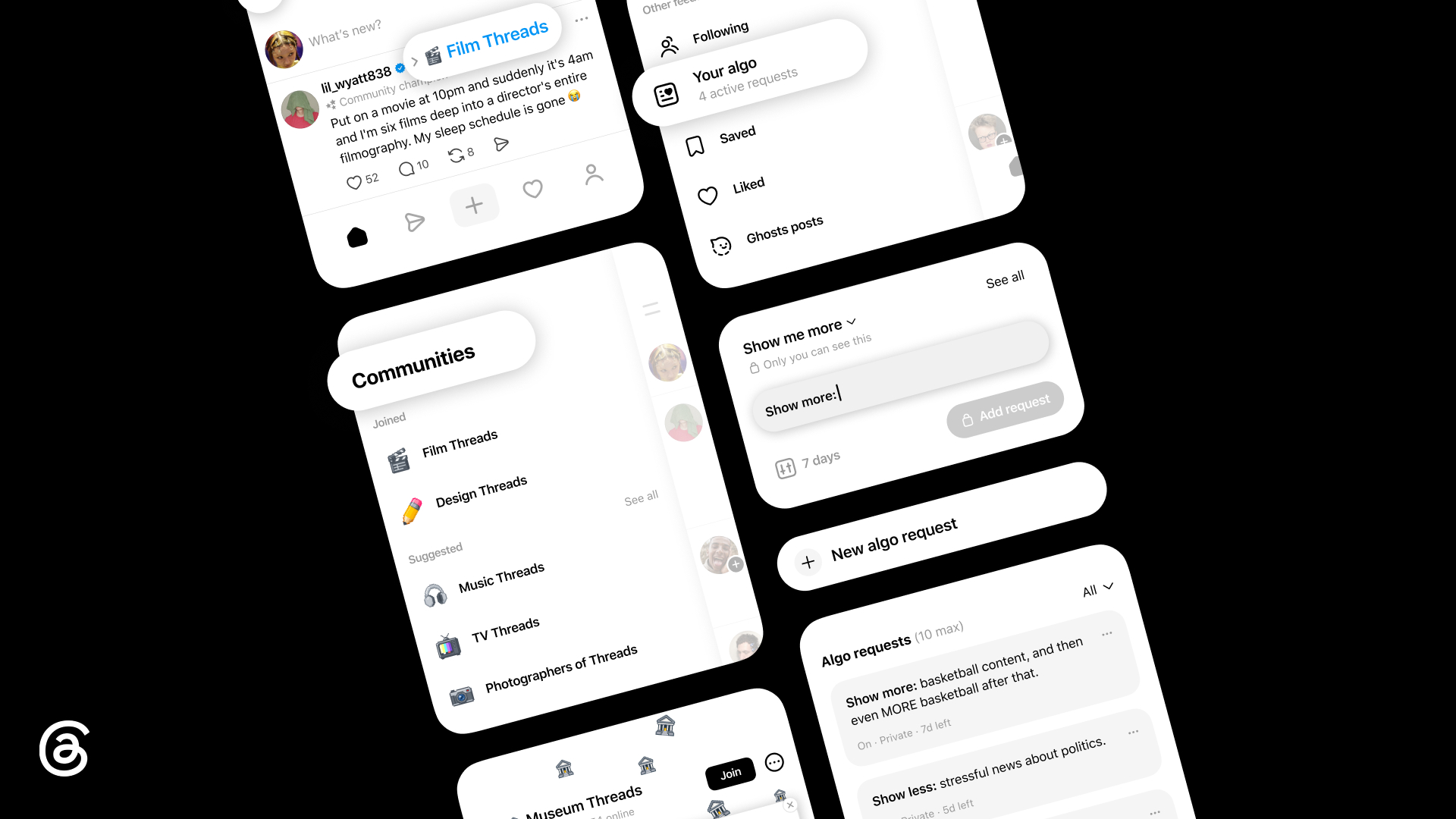
At the same time, Meta is expanding community features. Communities on Threads are leaving beta and getting their own hub, a stronger visual identity through community icons, a community progress system and broader recognition for active members through community champions. Meta is also launching local communities with native-language tags in Japan, Korea and Taiwan. Live Chats are expected to expand to more communities in the coming weeks and gain the option of co-hosting and quoting moments into the feed.
Alongside communities, Meta is also introducing a feature called Your Algo. It will allow users to privately tell Threads which topics they want to see more or less of in their feed, and to set whether those preferences should apply for one, three or seven days. The feature builds on the earlier Dear Algo, where users could give public feedback to the algorithm. Your Algo is launching first in the United States, Canada, the United Kingdom, Australia and New Zealand.
The UK wants to ban social media for children under 16
The British government has announced a plan to ban children under the age of 16 from using major social media platforms. According to the government announcement, the ban would apply to platforms such as Snapchat, TikTok, YouTube, Instagram, Facebook and X. Messaging services such as WhatsApp and Signal are expected to be excluded, because the government does not want to place them in the same category as algorithmic social platforms.
According to the government fact sheet, this is not only about banning social media for children under 16. The package also includes restrictions on harmful features on other online services, such as livestreaming or contact between children and strangers. For users aged 16 and 17, some risky features are to be restricted by default. The government is also talking about stricter age checks.
The Guardian reports that the ban is based on the Australian model and is expected to apply to user-to-user services with algorithmic recommendations and the ability to publish content. The regulator Ofcom is expected to play a key role in implementation and age verification. Possible age assurance methods include digital identity, facial age estimation or verification through banking data.
For the advertising market, this is a major issue. The Guardian, citing an eMarketer analysis, says the ban could reduce expected digital advertising spend in the United Kingdom for 2027 by £1.3 billion. Some budgets may, according to estimates, shift to streaming services with advertising tiers, such as Netflix, Amazon Prime Video or Disney+, as well as to sport, school environments, family television formats and other channels outside traditional social media.
Levi’s showed that the strongest brand is one you can recognise even without the name
During the World Cup, the name Levi’s Stadium had to be covered because of FIFA rules, and the stadium is being referred to neutrally during the tournament as San Francisco Bay Area Stadium. But covering the logo created a shape resembling Levi’s iconic batwing symbol. Photos began circulating on social media, and what started as a mandatory restriction turned into one of the smartest brand moments of the tournament. Levi’s then changed its Instagram profile picture and used the situation as its own social moment.

Viral hero number one: Tim Payne
One of the biggest stories of the first week of the World Cup is New Zealand defender Tim Payne. Reuters writes that Payne became a viral sensation after an Argentine influencer called him the “least famous player” at the tournament and encouraged fans to start following him. His Instagram grew from fewer than 5,000 followers to around 5.8 million. Shortly afterwards, Reuters reported that Payne had signed a one-year contract with Paraguayan club Olimpia.
This is a textbook example of modern sports value. A star was not created first through performance, but through narrative. “The least famous player at the World Cup, whom the internet collectively lifts up.” The story was simple, easy to understand and had a clear call to action: follow him.
Viral hero number two: Vozinha and the power of streamers
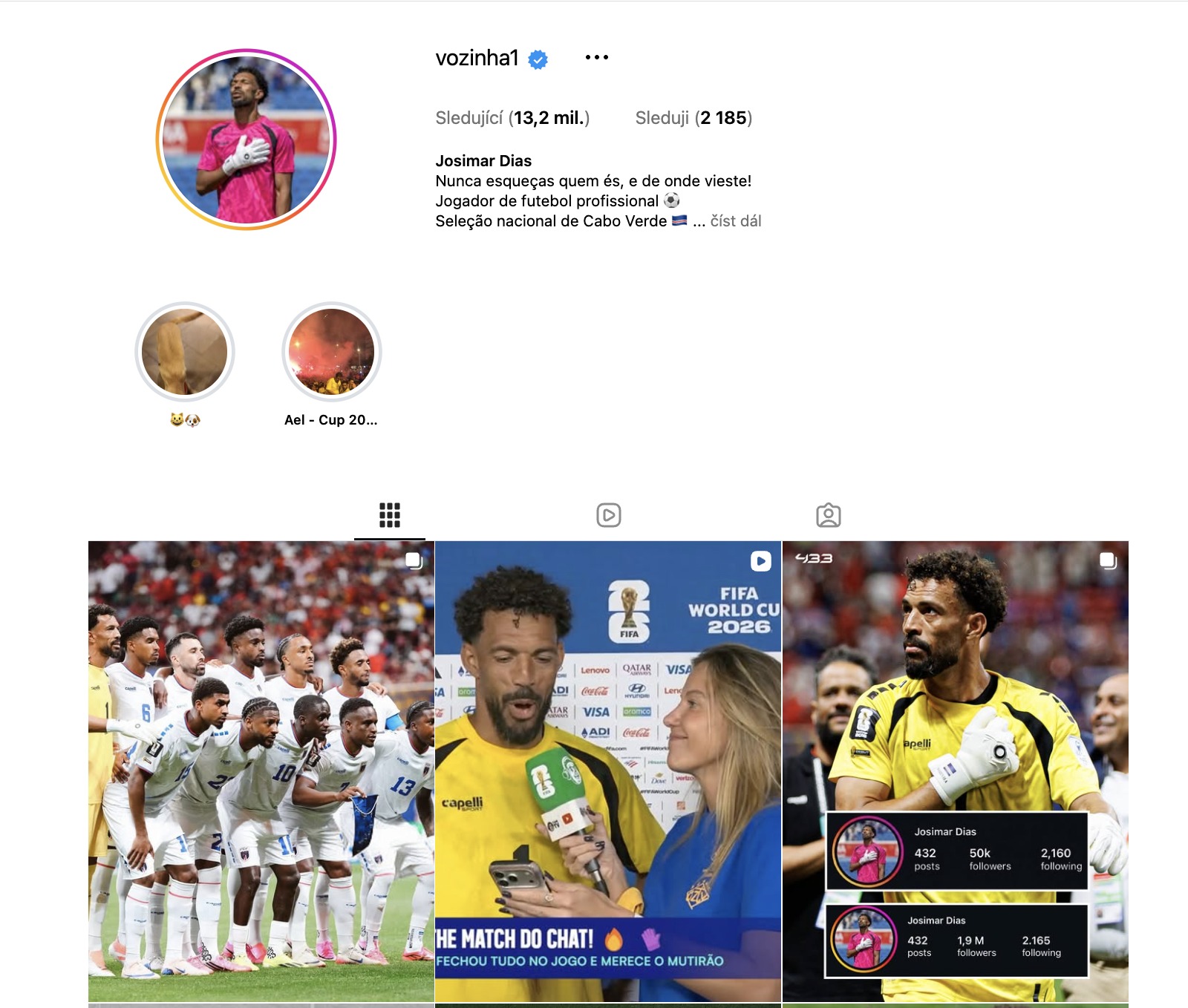
An even stronger case came from Cape Verde. Goalkeeper Vozinha experienced enormous Instagram growth after a 0-0 draw with Spain. AP reports that before the match he had around 50,000 followers, after the match more than one million, and in less than 24 hours almost 10 million. A major role was played by Brazil’s CazéTV and streamer Casimiro Miguel, who urged his audience during the broadcast to start following Vozinha. According to AP, CazéTV has more than 31 million subscribers on YouTube and works with an informal, community-based style of sports broadcasting.
This is no longer just a viral moment. It shows how a streamer can become distribution infrastructure. Casimiro Miguel did not act as a traditional commentator. He acted as a community leader who can turn attention into action during a live broadcast.
That is the key lesson for brands. Influencers are not just “reach”. They are people who can mobilise an audience. The difference between advertising reach and community mobilisation is fundamental: advertising communicates, but a community acts.
Merlin: the duck as an unplanned mascot
The third type of viral story is Merlin, a domesticated duck wearing a Mexico jersey. Reuters describes how Merlin appeared in the streets of Mexico City after Mexico’s win over South Africa in the opening match. Fans filmed him on their phones, the footage began spreading online, and people started calling for him to become the unofficial mascot of the Mexican team. The most important thing about this story is its authenticity. Merlin is not an agency idea. It is not a planned activation. It is absurd, visual, local and instantly understandable. Exactly the kind of moment social networks love.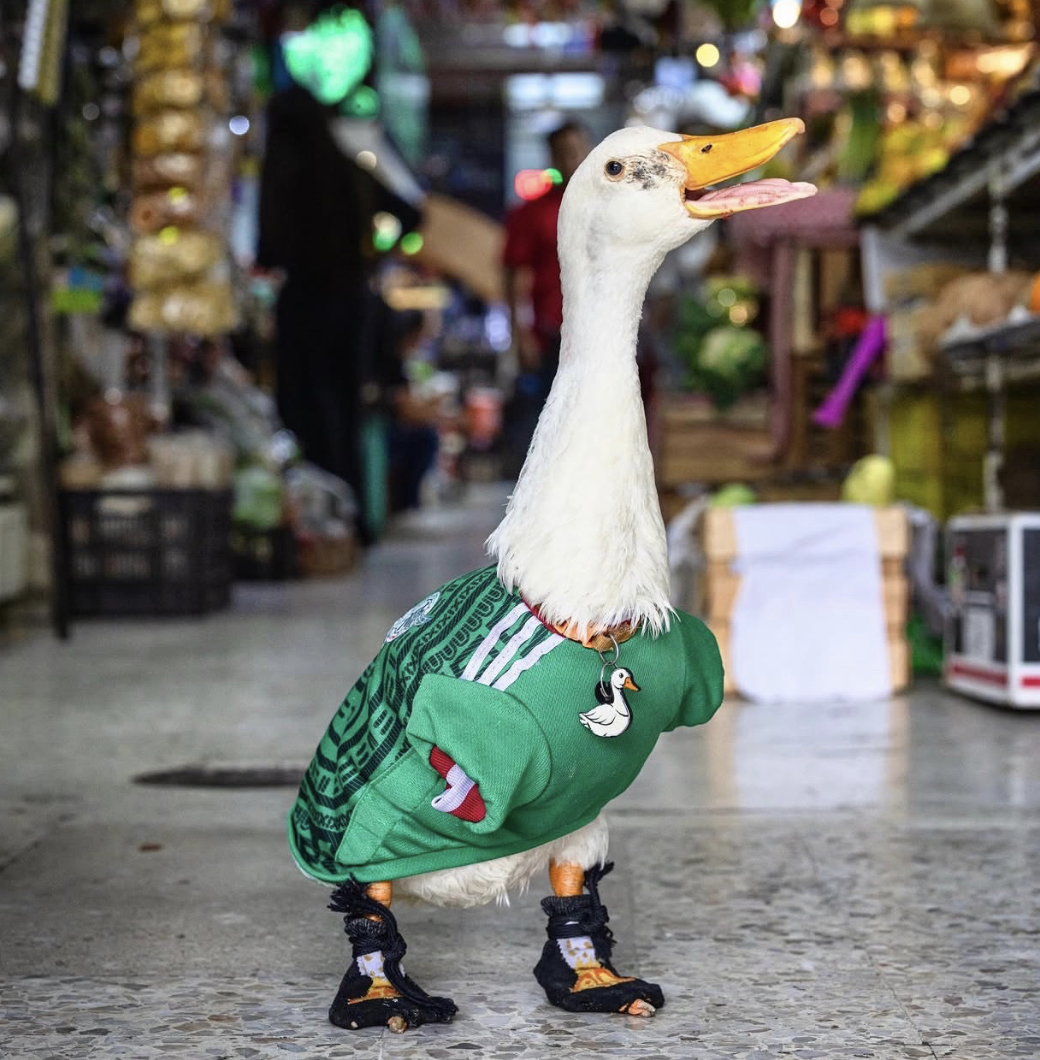 Nike vs. Adidas: brands no longer compete only in advertising, but in culture
Reuters described this year’s World Cup as an important battle between Nike and Adidas. Nike wants to use the tournament to strengthen its brand at a time when it is facing broader business pressure, and is building on its Rip the Script campaign, new Mercurial boots, work with retailers and sponsorship of 12 national teams. Adidas holds the position of official sponsor, supplies the official match ball and outfits 14 teams. Reuters also notes that Mexico and Argentina jerseys are selling particularly well.
Carl for Social
Don't miss what's coming next.
Stay on top of social media trends and tips that help you grow your content on Instagram, TikTok, Facebook, and YouTube. Download Carl for Social — it's free.
Download app